EU Interior Ministers to Meet Tuesday Over Ceuta Migrant Crisis
EU interior ministers will convene Tuesday following a mass migrant crossing into Ceuta, Spain, with divisions over the bloc's response.
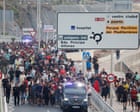
The European Union will convene an urgent meeting of interior ministers on Tuesday to address the ongoing crisis in Ceuta, the Spanish territory in north Africa, following the arrival of tens of thousands of migrants and significant divisions within the bloc on how to respond. The decision for the summit was made unanimously by officials representing EU member states and Frontex, the European border and coast guard agency, during a "sobering" meeting on Saturday.
This gathering comes in the wake of a dramatic surge in migrant arrivals in Ceuta, a Spanish enclave bordering Morocco. The scale of the influx has strained resources and highlighted existing rifts among EU nations regarding migration policies and border management. The situation has prompted a high-level response, underscoring the perceived severity and potential destabilizing effects of such large-scale, irregular border crossings.
Spain confirmed that at least 67 people died during the attempted crossings, with some drowning and others succumbing to injuries sustained while navigating a breakwater barrier. Spanish Prime Minister Pedro Sánchez stated that "virtually all" migrants attempting to enter Ceuta had been returned to Morocco after the Spanish army intervened on Friday, effectively preventing further unauthorized movement toward mainland Europe. He also denounced "fake news" and "disinformation" surrounding the events.
The upcoming ministerial meeting aims to foster a unified approach to migration and heal divisions within the EU. Spain has expressed frustration that previous large-scale migrant arrivals at other EU borders, such as those between Belarus and Poland or Russia and Finland, were characterized as "hybrid attacks" and met with greater solidarity from member states.
Italy and Denmark, with support from Poland and Sweden, reportedly criticized Spain's handling of the situation during Saturday's meeting. The backdrop to these internal discussions includes suspected Russian disinformation campaigns aimed at sowing dissent within the EU, an issue also reportedly discussed by officials. The prompt return of migrants to Morocco, with Spain reporting over 48,000 voluntary returns by the end of Saturday, has been a key element of Spain's immediate response.
Following the intense arrivals, Spanish authorities began deploying a 500-meter (1,640ft) floating barrier off the coast of Ceuta, adjacent to its border with Morocco, in an effort to stem future crossings. The effectiveness and human rights implications of such measures are likely to be points of discussion among ministers.
British Prime Minister Andy Burnham indicated that the UK is in communication with the Spanish prime minister and offering assistance, signaling a wider international awareness of the crisis. The situation in Ceuta remains a focal point for discussions on EU border security, humanitarian concerns, and the complex geopolitical dynamics influencing migration flows into Europe.
Questions remain about the long-term strategy for managing migration at the EU's external borders, the role of neighboring countries like Morocco, and how the bloc will reconcile differing national interests and approaches to asylum and border control.
This article was written by AI based on publicly available news reporting. Original reporting by the linked source.