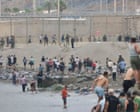
Misinformation and hardened policy fueled Ceuta migrant crisis, sparking EU border fears.
Ceuta, a Spanish enclave, became a flashpoint as misinformation and strict immigration policies amplified a migrant influx, triggering border security debates.
Last week, an estimated 72,000 migrants attempted to cross into Ceuta, a small Spanish enclave on Morocco's northern coast. While the majority returned within 24 hours, local officials reported at least 88 deaths during the crossings. This event has become a focal point for discussions on European border security and immigration policy.
This situation in Ceuta echoes patterns observed since the 2015 refugee crisis. As Europe has restricted legal migration pathways, individuals seeking refuge or better opportunities have resorted to increasingly dangerous illegal crossings. These events often result in human tragedies and generate dramatic imagery that is subsequently leveraged by political groups to advocate for stricter border controls and more stringent immigration policies.
EU interior ministers convened an emergency meeting to address the Ceuta situation, asserting that the passport-free Schengen area was never truly at risk from the scale of the migrant arrival. Despite these assurances, significant media coverage framed the events as a territorial threat to Europe, fueling calls for enhanced regional border security.
Daniel Trilling, a journalist specializing in refugee and migration issues, noted that political actors are actively seeking to capitalize on the Ceuta incident. He explained that such tragedies are likely to persist as long as restrictive policies remain in place, creating dangerous conditions for those attempting to cross borders.
Experts suggest that the events in Ceuta highlight a recurring challenge for European policymakers: balancing humanitarian concerns with border management. The rapid influx, coupled with the tragic loss of life, creates a potent mix of public concern and political opportunity, often leading to a focus on enforcement over addressing the root causes of migration.
The narrative surrounding the Ceuta crisis has been significantly shaped by misinformation and the strategic use of dramatic images. Right-wing political factions have been particularly adept at using these elements to promote a hardened stance on immigration, often overshadowing the complex realities faced by migrants and the humanitarian implications of the situation.
This pattern of exploiting migration events for political gain is not new. Following the 2015 crisis, similar tactics were employed to justify increased border surveillance and the implementation of more restrictive asylum procedures across several European nations. The Ceuta incident appears to be the latest manifestation of this ongoing political dynamic.
Key questions remain regarding the long-term implications for EU immigration policy and the safety of migrants attempting perilous journeys. The tension between calls for increased security and the need for humane solutions continues to define the debate around Europe's borders.
This article was written by AI based on publicly available news reporting. Original reporting by the linked source.