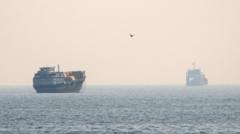
US Strikes Iran After Strait of Hormuz Closure; Jordan Base Hit
US launched new strikes on Iran after Tehran closed the Strait of Hormuz and attacked a Cyprus-flagged vessel, prompting retaliation on a Jordan base.
The United States launched a fresh wave of strikes against Iran on Sunday, escalating tensions after Iran's Islamic Revolutionary Guard Corps (IRGC) closed the vital Strait of Hormuz and attacked a commercial vessel. The IRGC announced the closure of the waterway "until further notice" and warned of severe retaliation against perceived US aggression.
This latest exchange follows a series of incidents earlier in the week involving attacks on three commercial tankers. The US stated its strikes were a response to the IRGC "blatantly attacking" the Cyprus-flagged MV GFS Galaxy as it transited the Strait of Hormuz. The vessel sustained significant damage to its engine room, leaving one civilian crew member missing.
US Central Command (Centcom) confirmed the strikes, noting that Iran had been given an "opportunity to demonstrate adherence" to a Memorandum of Understanding after previous attacks but had "again failed." US Secretary of Defense Pete Hegseth reinforced this stance, stating, "Iran made a poor choice. Now they pay."
In immediate retaliation, the IRGC claimed to have struck a US base in Jordan, reporting the destruction of its command and control center and MQ9 drone hangars. The United Arab Emirates, Qatar, and Bahrain also reported responding to missile and drone activity originating from Iran.
Earlier on Sunday, Iran's state media reported the closure of the Strait of Hormuz after an incident where a naval cruise missile was fired at a vessel attempting to use an "unapproved route." The IRGC stated the vessel was hit by warning shots after ignoring repeated instructions and was subsequently stopped. Iran warned that any US aggression resulting from the closure would be met with severity, potentially targeting new bases in the region.
The maritime situation has been fraught, with Iran asserting that the only safe passage through the Strait is a route designated through its own waters. This contrasts with a US-recommended route through Omani waters, where three commercial tankers were attacked earlier in the week. These attacks had previously prompted US strikes that, according to Iranian officials, resulted in 17 deaths and 115 injuries.
Following the earlier tanker attacks, US President Donald Trump declared that an existing ceasefire was over, although he indicated that talks would continue with mediators attempting to revive the process. Iran's Foreign Minister Abbas Araghchi had accused the US of violating the deal, while US media reported Iran had informed American officials that the tanker attacks were a mistake attributed to a rogue internal group.
US officials, through intermediaries, have reportedly conveyed demands for Iran to publicly disavow the attacks and accept responsibility. The situation remains volatile, with the closure of the Strait of Hormuz posing significant implications for global oil transit and international maritime security.
This article was written by AI based on publicly available news reporting. Original reporting by the linked source.