US Strikes Iran Sixth Night; Iran Claims Civilian Sites Hit, Retaliates
US forces conducted strikes for a sixth consecutive night, with Iran reporting hits on civilian infrastructure and retaliating against US surveillance sites.
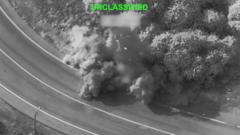
The United States launched a wave of strikes against Iran for the sixth night in a row, its military confirmed, amid escalating tensions over control of the Strait of Hormuz. US Central Command (Centcom) stated the attacks were aimed at further degrading Iranian military capabilities. Iran's state media, however, reported that the US had struck civilian infrastructure, including bridges, a train station, and an airport. The BBC has verified an attack on a bridge west of Bandar Abbas.
These actions come as the critical Strait of Hormuz remains shut, a situation that has disrupted global oil flow and raised concerns from the International Energy Agency. The agency's head, Fatih Birol, expressed worry about global energy supplies if the situation does not improve soon. The ongoing conflict has significant implications for international trade and energy markets.
Iran's Revolutionary Guards (IRGC) announced retaliatory actions, claiming to have struck US maritime surveillance radar sites in Oman and targets in Kuwait and Bahrain. The IRGC also asserted an attack on a US special operations command center in Syria, near the Jordanian border, stating it was in response to the killing of Iranian soldiers two days prior. Neither Syria nor the US has officially commented on this claim.
Jordan's military reported intercepting three Iranian missiles on Friday, with no reported casualties or damage. Separately, Kurdish forces in Iraq announced shooting down eight drones over the city of Erbil without casualties. These events highlight the widening regional impact of the conflict.
Centcom's list of dozens of Iranian military targets hit in the latest strikes included coastal surveillance and air defense sites, military logistics infrastructure, and maritime capabilities. The US military command did not specifically mention bridges in its operational summary. The BBC has sought comment from Centcom regarding the discrepancies.
Earlier in the week, US President Donald Trump had issued threats to strike Iranian bridges and power plants if the country did not resume negotiations. These threats drew a strong response from UN human rights chief Volker Türk, who stated that deliberately attacking civilians and civilian infrastructure constitutes a war crime.
Iranian state news agency IRNA reported that seven people were killed in the strikes, with at least 38 deaths and over 100 injured reported across various incidents mentioned in state media. The targeted locations included Iranshahr Airport in southeastern Iran, a railway station in Bandar Khamir, and five bridges in the port city.
In response to the escalating conflict, Chinese and Pakistani foreign ministers on Friday urged both the US and Iran to cease hostilities and re-engage in negotiations to de-escalate the situation.
This article was written by AI based on publicly available news reporting. Original reporting by the linked source.