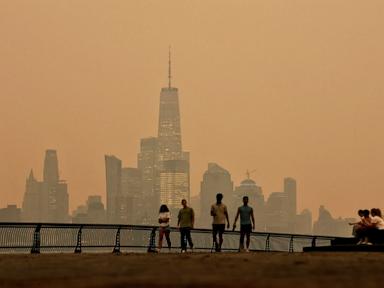
Canadian Wildfire Smoke Triggers Air Alerts in 17 US States
Wildfire smoke from Canada blankets 17 US states, causing hazardous air quality in major cities and impacting air travel.
Air quality alerts are in effect across at least 17 U.S. states as dangerous smoke from Canadian wildfires drifts southward. The plumes of smoke, originating from over 100 uncontrolled blazes in Canada, have traveled more than a thousand miles, reaching as far as New York City and impacting areas from Minnesota to Virginia.
This widespread smoke poses significant health risks and has led to some of the poorest air quality readings globally for major urban centers. The sheer scale of the Canadian wildfires, with 858 active blazes reported, underscores the severity of the situation and its reach into the United States.
On Thursday morning, Detroit, Michigan, recorded the world's worst air quality among major cities, with an Air Quality Index (AQI) nearing 570, far exceeding the "hazardous" threshold of 301. Minneapolis, Chicago, and Toronto also ranked among the top cities with severely compromised air quality, according to IQAir.
The Federal Aviation Administration (FAA) has implemented measures to slow arriving flights at Philadelphia International Airport due to reduced visibility caused by the smoke. Reports from pilots indicate ash accumulating on aircraft windshields, highlighting the density and nature of the airborne particles.
Officials have described the situation as unprecedented, with smoke and ash from the Canadian infernos affecting visibility and creating hazardous conditions. The Canadian Wildland Fire Information System reports that as of Thursday, 109 of the active wildfires were burning out of control. This year alone, Canada has experienced 3,549 wildfires, scorching approximately 2.3 million hectares (over 93,000 square miles).
New York State, including New York City, and parts of New Jersey are under an Air Quality Advisory. The dense smoke is expected to cause orange skies in the region. The origin of the smoke, primarily from Ontario province, highlights the vast distances these atmospheric pollutants can travel.
Residents in affected areas are advised to limit outdoor activities and take precautions to protect their respiratory health. The long-term effects of such widespread smoke exposure are a growing concern for public health officials.
Further complicating the situation are the ongoing new ignitions, with 37 new fires reported on Thursday. The management and containment of these numerous and widespread fires present a significant challenge for Canadian authorities and a persistent threat to air quality in neighboring regions.
This article was written by AI based on publicly available news reporting. Original reporting by the linked source.