US Strikes Iran for 11th Night; Trump Threatens Nuclear Site Attack
US forces conducted strikes on Iran for the 11th consecutive night, as President Trump threatened an underground nuclear facility.
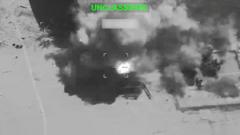
The United States launched strikes on Iran for the eleventh consecutive night late on Tuesday, with Tehran issuing a warning against targeting its nuclear facilities. U.S. Central Command (Centcom) stated the strikes were intended to further degrade Iran's capacity to threaten commercial shipping in the Strait of Hormuz.
This escalation follows a resumption of hostilities last week, breaking a ceasefire agreed upon in April. The conflict centers on control of the vital Strait of Hormuz waterway. Centcom detailed that U.S. forces targeted Iranian military operations centers, maritime assets, aircraft hangars, drone storage, and logistics infrastructure, accusing Iran of attacking over 30 commercial vessels in the Strait in the past three months.
Iranian state media reported the activation of air defenses in the capital, Tehran, and explosions in Tabriz, Chabahar, Konarak, and Bushehr, the latter being home to Iran's sole nuclear power plant. Iran has retaliated against the U.S. and its regional allies, and warned of further repercussions.
President Donald Trump indicated that the U.S. would soon target an underground nuclear site near Natanz, which is suspected of housing an undeclared enrichment facility. Trump stated that the U.S. would "be hitting that area pretty soon, and very heavily," adding that Iran would be unable to prevent it.
Iran's Khatam Al-Anbiya military command responded that such an attack would be viewed as an "expansion of war in the region," threatening to strike "all the interests of America, the allies and supporters." This exchange highlights the significant risks of a wider regional conflict.
Adding to the regional instability, Kuwait's army reported engaging drone attacks from Iran early Wednesday. Bahrain and Jordan also confirmed intercepting drone and missile strikes. These actions by Iran-backed groups and Iran itself are contributing to a volatile security environment.
President Trump also extended threats to Houthi rebels in Yemen, warning of action if the Iran-backed group followed through on a threatened blockade of Saudi ports. A Houthi official had previously announced the closure of the Bab al-Mandab Strait to Saudi vessels. The Red Sea has become critical for Saudi oil shipments, particularly during the ongoing conflict involving Iran.
Following the Houthi announcement, two tankers carrying Saudi crude oil redirected their routes, underscoring the potential for further disruption to international shipping. The volatile situation has already led to significant fluctuations in global fuel prices, with the threat from the Houthis posing a risk of further impact on maritime trade routes.
This article was written by AI based on publicly available news reporting. Original reporting by the linked source.