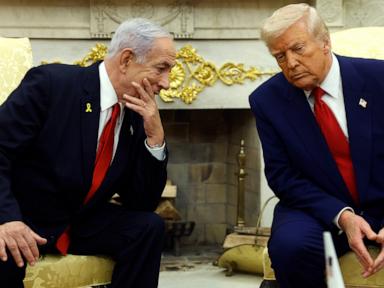
Netanyahu Rejects 15-Point Peace Plan Until Hamas Disarmed
Israeli Prime Minister Benjamin Netanyahu rejected a 15-point peace plan Sunday, demanding Hamas be disarmed before any IDF withdrawal from Gaza.
Israeli Prime Minister Benjamin Netanyahu declared on Sunday that Israel will not accept the 15-point peace proposal for Gaza put forth by President Donald Trump’s Board of Peace. The announcement came at the start of a cabinet meeting, where Netanyahu stated in Hebrew that the Israel Defense Forces (IDF) would not make any withdrawal until Hamas is "truly disarmed." He added that Israel would continue to thwart threats against its forces and citizens.
This rejection comes despite a broader U.S.-brokered ceasefire agreement announced in July. That agreement, brokered by President Trump, was intended to facilitate Hamas's disarmament and the withdrawal of Israeli forces from the Gaza Strip. The plan also involved the release of Israeli hostages and Palestinian detainees.
President Trump had previously described the agreement as a critical step toward Gaza being governed by a new Palestinian government that would collaborate with the Board of Peace. "At the same time, Israel will have the security it deserves, with Gaza no longer used as a base for terror attacks," Trump had stated on social media.
The 20-point plan, which led to the initial ceasefire and hostage-prisoner exchange, also stipulated Hamas surrendering its weapons, dismantling its military infrastructure including tunnels, and relinquishing power. In return, Israel was to withdraw troops, and Gaza was to receive humanitarian aid and international rebuilding efforts.
Hamas responded to Netanyahu's remarks on Sunday, affirming its commitment to Trump's 15-point plan for the second phase of the ceasefire. The group called on mediators, guarantors, and the Peace Council to uphold their responsibilities and prevent any actions that could disrupt the implementation or undermine the ceasefire.
The Board of Peace is a multinational organization established by the U.S. president to oversee peace efforts in Gaza. Its formation was part of a broader strategy to stabilize the region following prolonged conflict.
Netanyahu's firm stance indicates a significant hurdle in the ongoing peace process, highlighting the deep-seated security concerns Israel holds regarding Hamas's military capabilities. The prime minister's condition for disarmament prior to any Israeli withdrawal suggests a demand for a complete shift in the security landscape.
The situation leaves the implementation of the U.S.-brokered peace plan in a precarious state, with both Israel and Hamas asserting their respective conditions and commitments, potentially prolonging the uncertainty for the region.
This article was written by AI based on publicly available news reporting. Original reporting by the linked source.