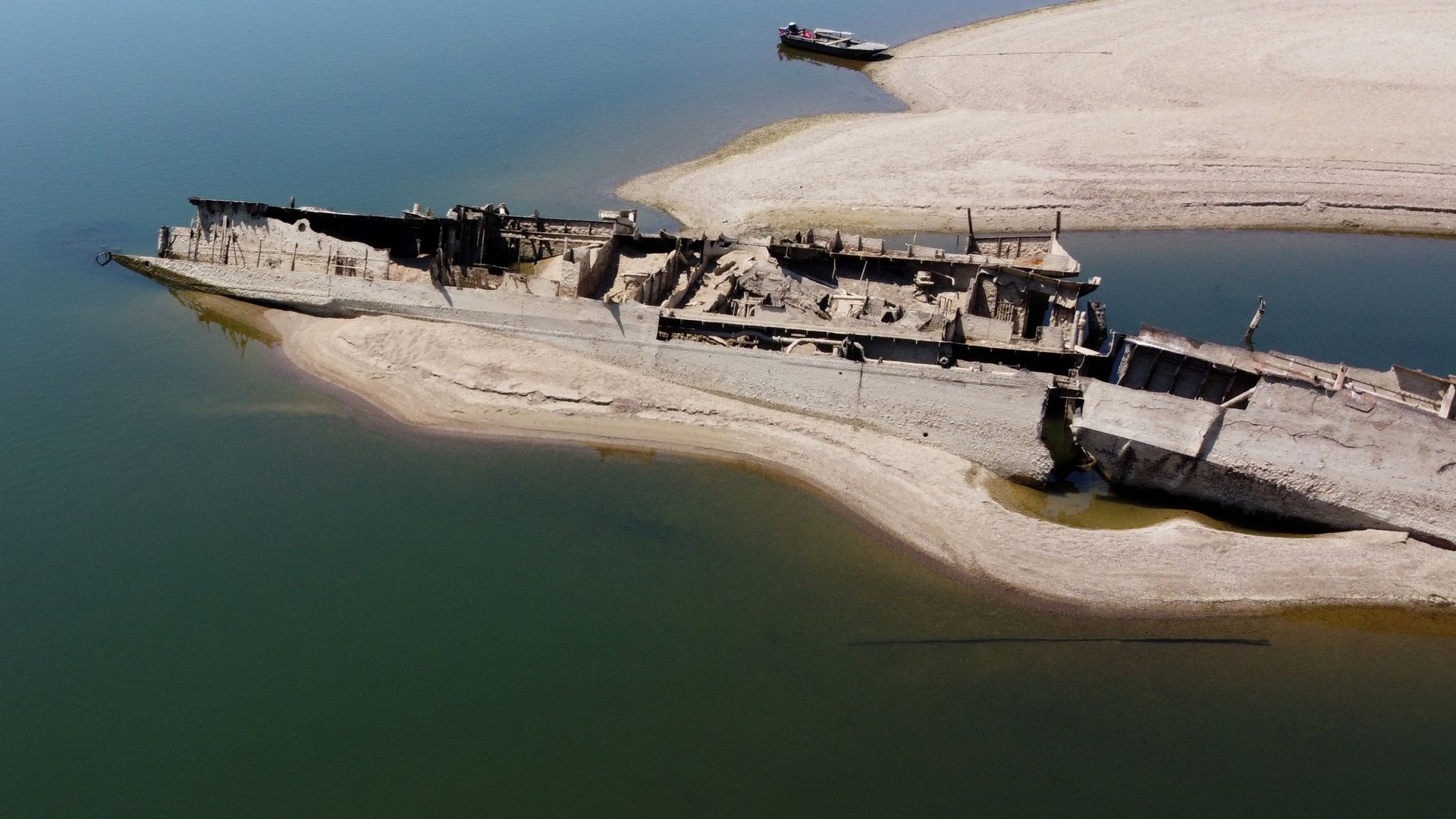
Nazi Warships Emerge from Danube as Record Low Water Levels Hit
Sunken Nazi warships have reappeared in the Danube River due to critically low water levels caused by Europe's summer drought.
Sunken Nazi warships have become visible in the Danube River as water levels have plummeted to record lows following a prolonged summer drought across Europe. The dramatic drop in the river's water level has exposed the skeletal remains of vessels that have lain submerged for decades.
The Danube, a vital waterway for commerce and transportation, has been severely impacted by the ongoing dry spell. This has led to unusually low water levels not seen in years, revealing historical remnants that are typically hidden beneath the surface.
Among the exposed vessels are several German warships from World War II, remnants of the naval battles and strategic movements that took place along the river during the conflict. The precise number and condition of the warships vary, but their reappearance is a stark visual reminder of the region's turbulent past.
The receding waters not only bring historical artifacts to light but also pose significant challenges. Low water levels disrupt shipping traffic, impacting crucial supply chains and economic activity that rely on the Danube as a transport artery. Furthermore, the exposed warships may present navigational hazards and potential environmental risks if they contain unexploded ordnance or pollutants.
This phenomenon is not entirely unprecedented, as periods of drought have historically caused water levels to drop in major European rivers, occasionally revealing submerged objects. However, the current extent of the drought and the resulting low water levels in the Danube are reported to be exceptional, making the appearance of these warships particularly notable.
The discovery has drawn attention from historians and local authorities, prompting discussions about potential salvage operations, historical preservation, and the environmental implications of disturbing these submerged sites. The long-term impact on river navigation and the potential for further discoveries as the drought persists remain key concerns.
Experts have warned that the dry weather patterns may continue, potentially leading to even lower water levels in the Danube and other affected European rivers. This raises concerns about the sustained disruption to riverine economies and the ongoing exposure of submerged historical artifacts, necessitating careful management and assessment.
As the situation unfolds, authorities and relevant agencies are monitoring the river levels closely, assessing the risks posed by the exposed warships, and considering measures to mitigate the economic and environmental consequences of this extraordinary environmental event.
This article was written by AI based on publicly available news reporting. Original reporting by the linked source.