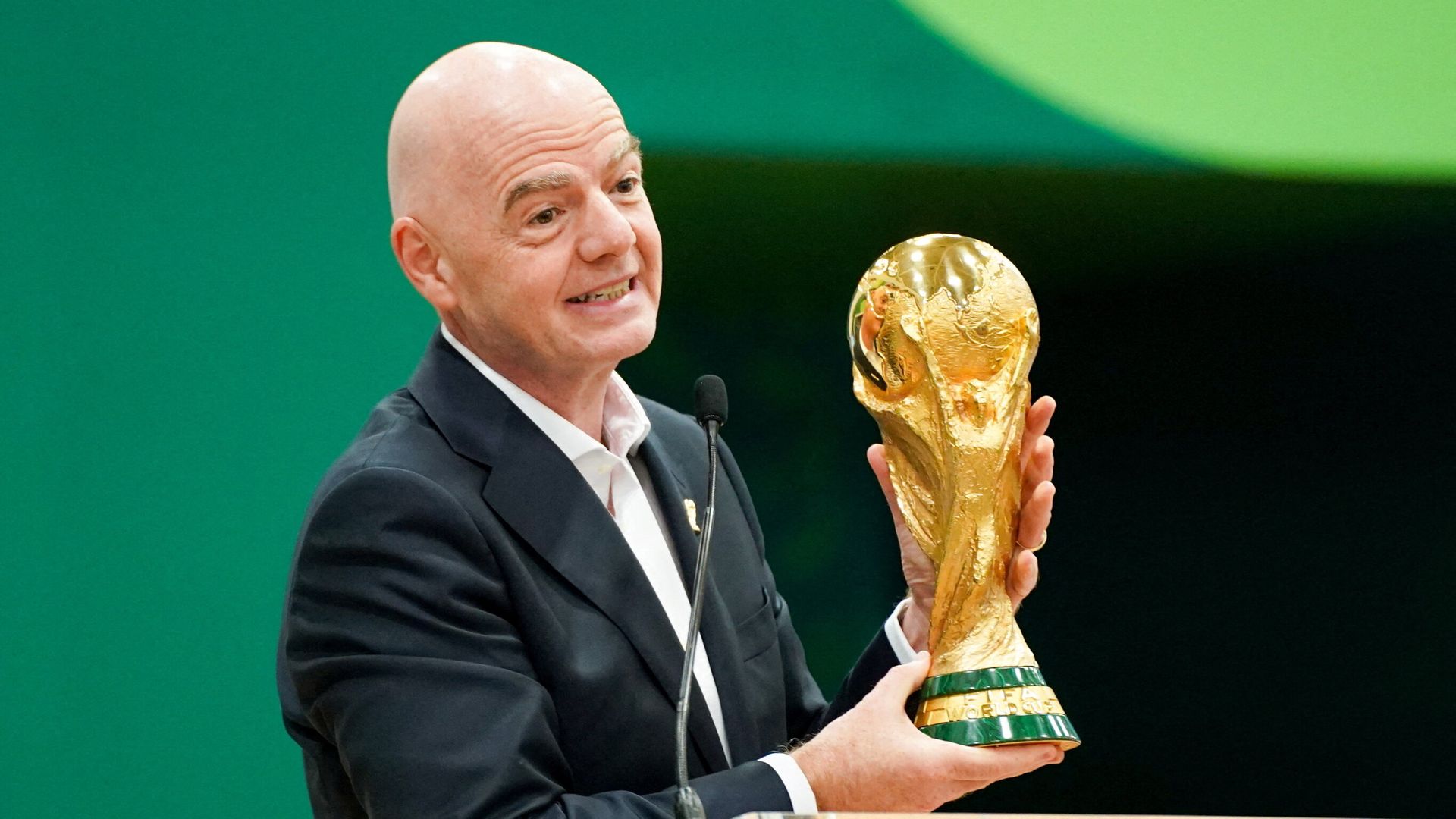
European Nations Eye World Cup Boycott Over FIFA Investor Plans
European countries are considering a World Cup boycott if FIFA President Gianni Infantino proceeds with selling stakes to private investors.
Several European nations are reportedly engaged in discussions about potentially boycotting the upcoming World Cup. The potential boycott stems from plans by FIFA President Gianni Infantino to sell a portion of the organization to private investors, a move that has drawn significant opposition.
This proposed sale represents a critical juncture for football governance, with critics arguing it could compromise the sport's integrity and prioritize commercial interests over its values. The discussions among European nations highlight deep-seated concerns about the direction FIFA is taking under Infantino's leadership.
Sources indicate that the primary catalyst for these boycott talks is the perceived overreach by Infantino, with the plans to bring private investors into FIFA being described as "crossing a line." The specific details of the proposed investment deals and the extent of private control remain points of contention and concern for the European football federations.
The implications of a widespread boycott by major European footballing nations would be substantial, potentially undermining the legitimacy and commercial viability of the World Cup. It could also trigger a significant governance crisis within FIFA, forcing a re-evaluation of its relationship with commercial partners and its member associations.
Historically, FIFA has maintained a structure that, while involving commercial partnerships, has largely kept core decision-making and ownership within the confederations and national associations. The introduction of significant private investment could fundamentally alter this balance, leading to concerns about accountability and the allocation of revenue.
While specific countries involved in the boycott discussions have not been publicly named, it is understood that these are nations with significant influence within European football. Their collective action, or even the threat of it, carries considerable weight in the global footballing landscape.
Further details regarding the precise nature of the proposed investment and the specific demands or conditions set by the European nations are still emerging. The situation is fluid, with ongoing dialogue expected to determine the eventual course of action.
Questions remain about FIFA's response to this potential backlash and whether Infantino will reconsider his strategy in light of the significant opposition from key member federations. The outcome of these deliberations could shape the future financial and operational model of international football's governing body.
This article was written by AI based on publicly available news reporting. Original reporting by the linked source.