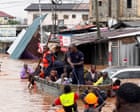
Global heating supercharged West Africa floods, displacing thousands
Scientists link recent intense rainfall and devastating floods in West Africa to climate breakdown, displacing thousands and causing fatalities.
Dozens of people drowned, hundreds were rescued, and thousands were displaced when severe floods struck the coasts of West Africa last month. Scientists have now concluded that the intense rains causing these devastating floods were supercharged by global heating, transforming what might have been a routine weather event into a climate catastrophe.
The findings highlight the urgent need for both adaptation to a "frightening new normal" and accelerated emissions reductions. "The climate is changing faster than most nations can adapt," stated Friederike Otto, a professor of climate science at Imperial College London. "Adapting to these now common events is critical, but so is reducing emissions much further and faster, to allow us time to keep up with the changes we’ve already put into motion. Quite simply, until emissions stop these extremes will only grow worse."
Residents along the Gulf of Guinea coast are accustomed to heavy rains during the May to July rainy season. However, the rainfall that began on June 20 was exceptionally intense and caught many by surprise. Over a 72-hour period, heavy rainfall inundated the densely populated coastal regions of Côte d’Ivoire, Ghana, Togo, and Nigeria. Some cities recorded over 140mm of rain in less than a day, overwhelming drainage systems and triggering widespread flash floods.
The deluge inundated neighborhoods, washed away markets, submerged roads, and swamped infrastructure from Lagos to Monrovia. Tragically, at least 34 people died in Ghana, five in Togo, and 59 in Côte d’Ivoire as a result of floods since May. The World Weather Attribution team, including Otto, has been analyzing the event to quantify the impact of climate change.
This extreme weather event serves as a stark reminder of the vulnerability of coastal communities in West Africa to the escalating impacts of climate change. The region's low-lying areas and often inadequate infrastructure are particularly susceptible to rising sea levels and more intense rainfall events, both linked to global warming.
Experts emphasize that while immediate relief and adaptation measures are crucial for affected populations, the long-term solution lies in global efforts to curb greenhouse gas emissions. The science indicates a clear link between human-induced climate change and the increased frequency and intensity of such extreme weather events.
Further analysis by climate scientists is expected to provide more detailed insights into the specific attribution of this event to global heating. However, the preliminary conclusions underscore the growing consensus on the role of climate breakdown in exacerbating natural disasters worldwide.
The recurring nature of these floods raises critical questions about urban planning, disaster preparedness, and the equitable distribution of resources for climate adaptation in vulnerable regions. The displacement of thousands underscores the profound human cost of climate change, demanding immediate and sustained international attention and action.
This article was written by AI based on publicly available news reporting. Original reporting by the linked source.