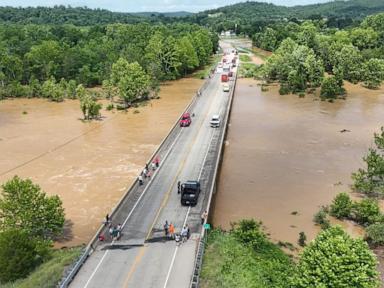
Nation Faces Sweltering Heat and Destructive Flash Floods
Extreme heat shatters records in the West, while heavy rains cause flooding and prompt water rescues nationwide.
Nationwide, a dual threat of extreme heat and dangerous flash flooding is impacting communities. In the West and northern Plains, record-shattering temperatures are scorching multiple cities, while the Midwest and South grapple with widespread heavy rainfall and severe thunderstorms.
The extreme heat is particularly concerning in states like Utah, Montana, and Minnesota, where daily high temperature records are being challenged. This intense heat, coupled with dry conditions, is also exacerbating fire danger in the Northwest.
Record-breaking temperatures were recorded across the West on Sunday. Salt Lake City reached a preliminary high of 109 degrees Fahrenheit, surpassing its previous all-time record set multiple times since 1960. Billings, Montana, hit 111 degrees, breaking its 2002 record, and Miles City, Montana, saw a preliminary high of 115 degrees, shattering its 2012 record. Heat alerts have been issued across a vast area from Southern California to Minnesota.
Meanwhile, the Midwest and South are experiencing significant flash flooding. A flash-flood threat extended from Tennessee to West Virginia on Sunday, with slow-moving thunderstorms causing inundation in areas like Huntington, West Virginia. Flood watches were in effect for major cities including Nashville, Lexington, and Charleston, West Virginia.
This severe weather follows catastrophic flooding in Missouri over the weekend, which necessitated hundreds of water rescues. Over 160 teenagers were rescued from Camp Taum Sauk in Reynolds County. Tragically, a missing woman in Crawford County, Missouri, was found deceased after being swept away by floodwaters.
Looking ahead, severe thunderstorms are possible across the Carolinas and eastern Georgia, bringing the risk of strong winds and damaging gusts. In southern Arizona, monsoon thunderstorms could also turn severe, producing damaging wind gusts and creating hazardous blowing dust conditions.
The confluence of extreme heat and heavy rainfall presents a complex weather scenario for the nation. Officials are urging residents in affected areas to stay informed about weather alerts and take necessary precautions to ensure their safety. The National Weather Service continues to monitor the evolving conditions across the country.
This article was written by AI based on publicly available news reporting. Original reporting by the linked source.