Five Dead in Japan as Record Rain Triggers Widespread Flooding, Stranding Thousands
Record rainfall in Japan has led to five deaths and left thousands stranded amidst severe flooding, prompting rescue efforts.
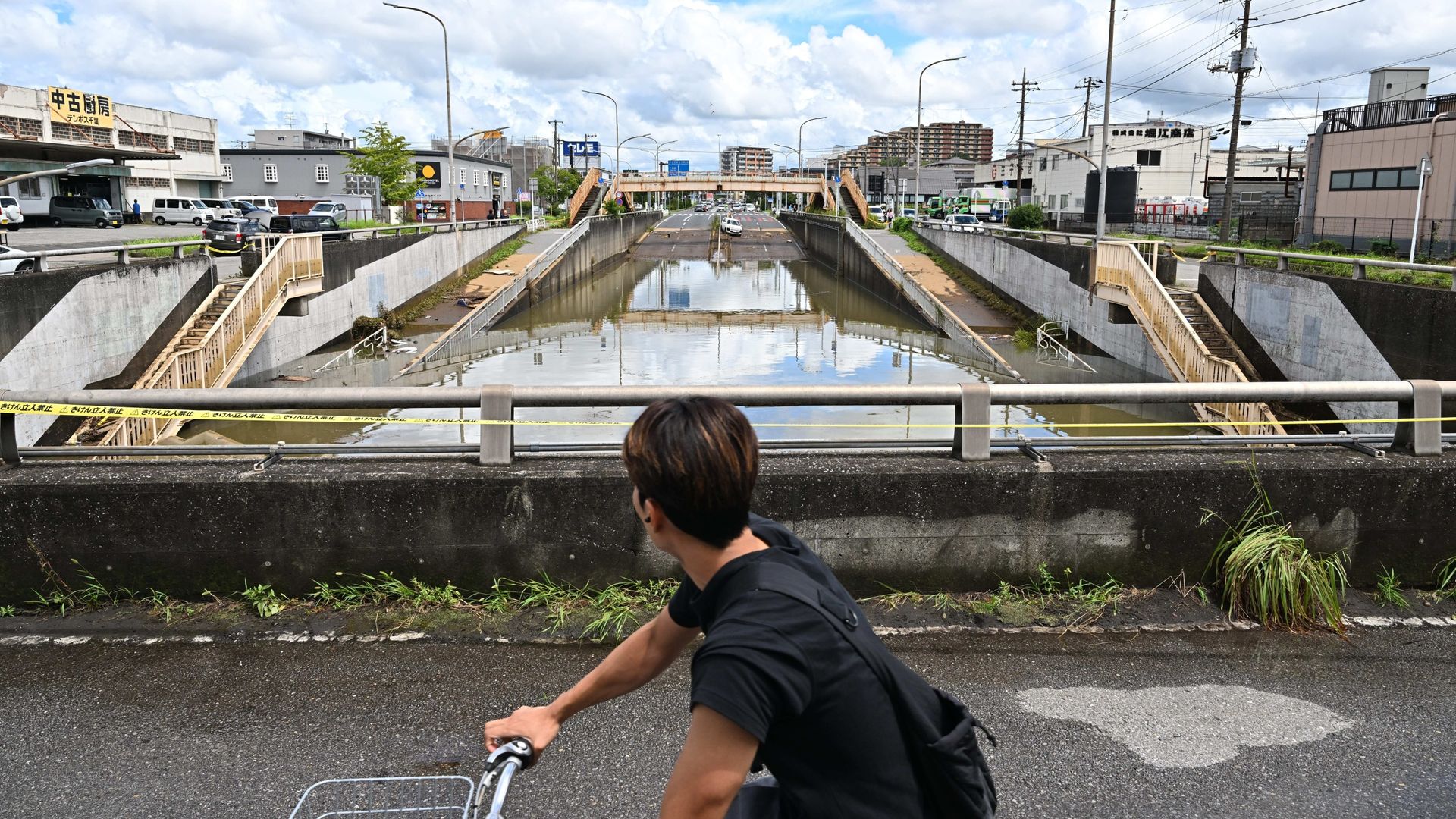
Five people have died in Japan following unprecedented rainfall that triggered severe flooding across several regions, leaving thousands stranded and necessitating extensive rescue operations. The downpours, described as record-breaking by meteorological officials, have overwhelmed river systems and inundated urban and rural areas.
The extreme weather event has caused widespread disruption, with transportation networks severely affected. Many roads have been rendered impassable, and train services have been suspended, isolating communities and hindering the movement of emergency services. The scale of the flooding has prompted authorities to issue evacuation advisories for vulnerable populations, though many residents have found themselves trapped by rapidly rising waters.
Local media reports indicate that rescue teams are working tirelessly to reach stranded individuals, with helicopters and boats deployed in the worst-hit areas. The fatalities are attributed to various causes related to the flooding, including drowning and landslides, which are often exacerbated by heavy rainfall in Japan's mountainous terrain. Officials are assessing the full extent of the damage to infrastructure and homes.
The implications of this event extend beyond the immediate crisis, highlighting the increasing vulnerability of Japan to extreme weather phenomena. Experts suggest that such intense rainfall events could become more frequent due to climate change, necessitating a review of existing disaster preparedness and infrastructure resilience measures. The government has pledged support for affected communities and is coordinating relief efforts.
This extreme weather event underscores a growing global concern over the intensification of rainfall patterns. Japan, with its dense population and often challenging topography, is particularly susceptible to the impacts of such events. The country has a history of dealing with natural disasters, including typhoons and earthquakes, but the sheer volume of rain in this instance has tested its preparedness systems.
Authorities are urging residents in affected areas to remain vigilant and follow official guidance. The Japan Meteorological Agency has warned that further rainfall is possible in some regions, although the intensity is expected to decrease. The focus remains on search and rescue operations and providing immediate relief to those displaced by the floods.
Discussions are underway regarding the long-term strategies for managing water resources and reinforcing flood defenses. The economic impact of the widespread damage to property and infrastructure is also a significant concern for local and national authorities as they begin the recovery phase.
As the waters begin to recede in some areas, the full scope of the devastation will become clearer. The immediate priority is ensuring the safety and well-being of all affected citizens, followed by comprehensive assessments and rebuilding efforts.
This article was written by AI based on publicly available news reporting. Original reporting by the linked source.