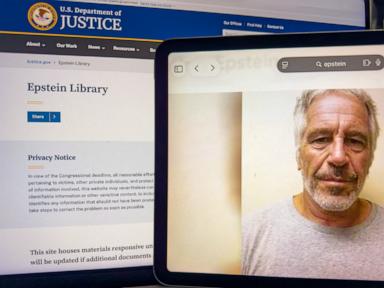
DOJ Declines Court Order for More Epstein Files, Cites Victim Privacy
The Department of Justice refused a judge's order to release more Epstein files, citing victim privacy and appropriate redactions.
The Department of Justice announced Thursday it would not comply with a court order to release additional documents related to the Jeffrey Epstein investigation, asserting that the materials contain sensitive victim information or were already appropriately redacted.
This decision comes after a judge mandated that the DOJ either provide the requested materials or offer sufficient justification for withholding them. The DOJ's stance signals a continued reluctance to disclose further details from the controversial case.
Associate U.S. Attorney General Stanley Woodward formally requested that the judge either postpone the deadline by 60 days or accept the DOJ's reasoning for non-disclosure. Woodward stated that while the government disputes the enforceability of the Epstein Files Transparency Act by private parties, they aim to clarify any confusion surrounding the records.
According to Woodward, some redacted emails were withheld to protect the identities of victims. He also noted that certain communications from victims, presented without context, could appear disturbing. For a draft 2007 indictment, the DOJ claimed that redactions were present in the original file and that an unredacted version could not be located.
Furthermore, interview notes pertaining to unsubstantiated assault claims against President Donald Trump were deemed duplicative of existing typewritten reports. Woodward cited the difficulty in redacting handwritten notes to prevent inadvertent disclosure of personal identifiable information.
The DOJ has released some interview reports but has withheld the underlying handwritten notes. Trump has denied the allegations made by the woman, whose claims remain uncorroborated.
This development follows previous judicial orders concerning the release of Epstein-related documents, highlighting ongoing legal battles over transparency in the high-profile case. The judge's initial order indicated that the DOJ had not adequately justified its withholding of certain records.
Legal experts suggest that the DOJ's refusal could lead to further legal challenges and potential sanctions, as the court weighs the public's interest in transparency against the government's claims of protecting victim privacy and adhering to legal redaction requirements.
This article was written by AI based on publicly available news reporting. Original reporting by the linked source.