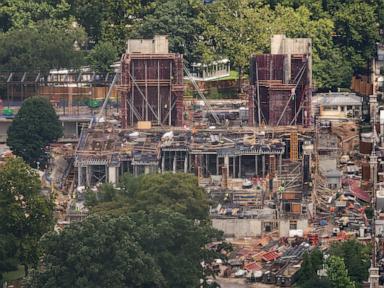
Appeals Court Blocks Trump's $400M White House Ballroom, Citing Congress
A federal appeals court ruled Friday that congressional approval is required for President Trump's $400 million White House ballroom project.
A federal appeals court on Friday blocked the construction of President Donald Trump's $400 million White House ballroom, ruling that congressional approval is necessary for such alterations to the historic structure. The decision by Judges Patricia Millett and Bradley Garcia stated that the President, as a "temporary tenant" of the White House, lacks the constitutional authority to make such changes without legislative consent.
The court found that the National Trust for Historic Preservation, which initiated the lawsuit to halt the project, successfully demonstrated that only Congress holds the authority to approve modifications to the Executive Residence, and this power was never delegated to the President. The judges emphasized that the decision is not about the desirability of the ballroom itself, but rather about the proper legal process for authorizing its construction.
"Whether or not a massive ballroom should be constructed is for Congress to decide and is not a matter for Executive self-help," the majority opinion stated. They further clarified that the project cannot proceed without Congress's authorization during the ongoing litigation.
President Trump announced his intention to appeal the ruling to the Supreme Court, expressing his disagreement with the court's decision. The White House had announced plans for the 90,000-square-foot ballroom last July, with demolition work on the East Wing commencing in late October.
In a dissenting opinion, Judge Neomi Rao argued that the National Trust for Historic Preservation lacked the jurisdiction to file the lawsuit. She contended that the President likely possesses the authority to improve the Executive Residence and that halting construction would harm the administration.
Judge Rao criticized the district court's decision, stating it "elevated the aesthetic displeasure of a single passerby over the government's security interests in the ballroom and the security risks of leaving an open construction site at the President's home and office." She described the preliminary injunction as an "abuse of discretion."
The appeals court acknowledged national security concerns related to the East Wing renovations but maintained that these concerns do not supersede legal requirements. The ruling is set to take effect in two weeks, providing the Trump administration an opportunity to file an appeal.
This legal challenge highlights the ongoing debate over the executive branch's power to modify federal properties, particularly those with significant historical and symbolic value, and underscores the checks and balances between the presidency and Congress.
This article was written by AI based on publicly available news reporting. Original reporting by the linked source.