Wildfires Force 300,000 Evacuations in France and Spain Amidst Heatwave
Wildfires in France and Spain, fueled by extreme heat, have forced over 300,000 evacuations and burned vast areas, creating dangerous fire thunderstorms.
Wildfires are raging across France and Spain, compelling more than 300,000 people to evacuate their homes amid a severe European heatwave. France is experiencing its most severe fire season in two decades, while officials in Madrid have described the situation in their region as the worst ever.
The intense heatwave has seen temperatures consistently exceed 40C (104F) in many parts of the continent, creating tinderbox conditions. In the regions surrounding Madrid, separate fires have collectively scorched an estimated 770 square kilometers (297 sq miles), an area larger than the Spanish capital itself.
France's Gironde region, near Bordeaux, is the most heavily impacted, with over 200,000 residents forced to flee. The fires have rapidly consumed forests and fields, burning approximately 420 square kilometers (162 sq miles) in under four days – an area roughly four times the size of Paris. The blaze is now dangerously close to the southern outskirts of Bordeaux, just 15 kilometers (9 miles) away.
These extreme fires have generated their own dangerous weather phenomena, including "fire thunderstorms." This rare event occurs when intense heat from the fire causes air to rise rapidly, carrying smoke and moisture high into the atmosphere. This can lead to the formation of cumulonimbus clouds, which can produce lightning, potentially igniting new fires and making containment efforts significantly more challenging.
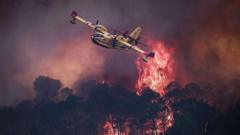
To combat the escalating blazes, French firefighters are deploying a range of aerial resources, including planes equipped with fire retardant and "Canadair" aircraft capable of dropping 6,000 liters of water scooped from nearby bodies of water. In high-risk areas, aircraft are pre-positioned to respond within minutes of a fire being reported, flying in continuous shuttles to lay retardant along fire perimeters while ground crews engage the flames directly.
In the Gironde region alone, the response involves approximately 2,500 firefighters, supported by 1,500 military personnel and 1,200 police officers. The fires also pose a threat to sensitive military and industrial sites, including facilities involved in the production of French ballistic missiles, rocket motors, and the handling of hazardous chemicals.
Satellite imagery over Gironde reveals extensive areas of scorched earth, with plumes of smoke drifting eastward. The creation of fire thunderstorms highlights the unprecedented intensity of the blazes, posing a dual threat of self-propagation through lightning strikes and making aerial firefighting operations more hazardous and unpredictable.
The ongoing situation underscores the growing threat of extreme weather events linked to climate change. Authorities continue to battle the fires, with the immediate focus on protecting populated areas and critical infrastructure while managing the volatile conditions created by the blazes themselves.
This article was written by AI based on publicly available news reporting. Original reporting by the linked source.