US, Iran Exchange Strikes, Accuse Each Other of Ceasefire Violations
US and Iran conducted retaliatory strikes, each accusing the other of violating a recently signed ceasefire agreement.
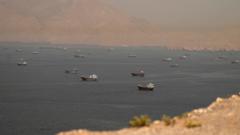
The United States and Iran have engaged in a series of strikes and launched accusations against each other, claiming violations of a recently established ceasefire agreement. The exchange began Saturday following a drone attack on a Panama-flagged vessel in the Strait of Hormuz.
US Central Command (Centcom) stated it conducted new strikes on multiple targets across Iran in direct response to what it called continued aggression against commercial shipping. This action followed an earlier drone attack on the MT Kiku, a Panama-flagged tanker. Centcom indicated that Iran was given an opportunity to honor the ceasefire but failed to do so.
In retaliation, Iran's Islamic Revolutionary Guard Corps (IRGC) announced it had launched ballistic missiles and drones targeting US infrastructure in Kuwait and Bahrain. The IRGC claimed to have destroyed eight key pieces of infrastructure at the Ali al-Salem base in Kuwait and the Fifth Naval Fleet in Port Salman, Bahrain. The corps stated the US had attacked five Iranian coastal posts under the pretext of the IRGC Navy confronting the offending ship.
While a US official reported no US casualties or significant damage to US facilities in the Middle East, the IRGC statement warned that any enemy aggression, regardless of scale, would face a "crushing response." The IRGC also accused the US of violating the memorandum of understanding signed earlier this month, suggesting it could lead to a complete halt of the process.
Following the latest US strikes, both Kuwait and Bahrain reported their air defense systems were activated. Kuwaiti forces confirmed confronting "hostile missile and drone attacks," while Bahrain's Ministry of Interior urged citizens to seek safe locations.
Centcom emphasized that commercial vessels continue to operate safely in the Strait of Hormuz. This latest escalation occurs less than a day after the US conducted separate retaliatory strikes against Iran in response to a June 25 drone attack on the Singapore-flagged cargo ship MV Ever Lovely.
Former President Donald Trump commented on the situation via Truth Social, suggesting that "Tehran would never learn" and hinting at a potential future military action that could lead to the "complete" end of the Islamic Republic of Iran.
The recent exchanges highlight the volatile security situation in the Strait of Hormuz, a critical chokepoint for global oil trade, and the fragility of the ceasefire agreement between the two nations.
This article was written by AI based on publicly available news reporting. Original reporting by the linked source.