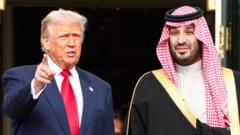
US, Saudi Arabia Sign Landmark Nuclear Deal, Raising Proliferation Concerns
The US and Saudi Arabia have signed a nuclear cooperation agreement, potentially allowing uranium enrichment and access for American firms.
The United States and Saudi Arabia have finalized a significant nuclear cooperation agreement, paving the way for the Gulf kingdom to develop a civilian nuclear program. The deal, announced on July 22, 2026, is described by the U.S. Energy Department as a peaceful nuclear cooperation initiative that will open doors for American companies to participate in Saudi Arabia's burgeoning nuclear energy sector.
This agreement marks a potentially transformative moment for the region's nuclear landscape. While the full text of the deal has not been publicly released, reports indicate it could permit Saudi Arabia to enrich uranium domestically in the future. Uranium enrichment is a critical process for producing fuel for nuclear power plants, but it also holds the potential for developing nuclear weapons, raising concerns among international experts about nuclear proliferation.
Details emerging from the U.S. Energy Department highlight that alongside the cooperation deal, a bilateral safeguards agreement was also concluded. These accords are intended to establish the legal framework for a long-term, multi-billion-dollar partnership, aiming to achieve key economic and strategic goals, including nuclear non-proliferation. U.S. Secretary of Energy Chris Wright stated that the agreements maintain the highest standards of nuclear safety and non-proliferation, leveraging top-tier American nuclear technology and expertise.
The implications of this deal are far-reaching, particularly given the volatile geopolitical climate in the Middle East. The agreement arrives amidst escalating tensions between the U.S. and Iran, with Saudi Arabia, a key U.S. ally, hosting American bases that have faced Iranian attacks. Furthermore, the deal follows a maritime blockade announcement by Iran-aligned Houthis in Yemen against Saudi Arabia.
Earlier media speculation suggested that Saudi Arabia, following joint studies with the U.S., might be authorized to enrich uranium on its own territory. This would involve building an enrichment facility, potentially making the kingdom less reliant on imported nuclear fuel and presenting significant economic opportunities for U.S. companies involved in its construction. Such a development could be worth billions of dollars.
The Saudi government issued its own statement, characterizing the deal as an extension of existing energy sector cooperation and noting that it follows Saudi leadership's visit to Washington last November. The statement did not offer further specifics on the nuclear aspects of the agreement.
However, the accord has already drawn scrutiny from nuclear experts and former officials, including those in Israel, a close U.S. ally. Concerns have been voiced that the deal could eventually enable Saudi Arabia to develop a nuclear weapons capability, despite assurances of adherence to non-proliferation standards.
U.S. Secretary of Energy Chris Wright emphasized that the agreements advance both U.S. and regional security, uphold stringent standards for nuclear safety, security, and non-proliferation, and bolster the United States' competitive advantage in civil nuclear technology. The Energy Department's statement also asserted that the deal strengthens the United States' competitive edge in civil nuclear technology.
This article was written by AI based on publicly available news reporting. Original reporting by the linked source.