US Missile Stockpiles Critically Low After Iran War, Official Warns
Crucial US missile stockpiles are 'extremely low' following the war in Iran, raising concerns for future military operations.
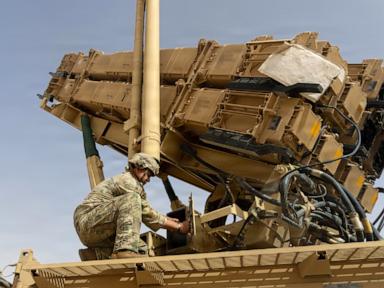
Crucial U.S. missile stockpiles, including key air defense weapons and long-range offensive missiles, have been depleted to "extremely low" levels following the recent conflict with Iran, a U.S. official disclosed. The war has significantly impacted inventories of systems like the Patriot and THAAD missile systems, with analysts estimating substantial reductions.
The depletion of these critical munitions presents a potential constraint for President Donald Trump as he considers the future of U.S. military engagement and potential escalation with Iran. The U.S. has been involved in a conflict with Iran, which has largely been fought from a distance or through air attacks, leading to a significant draw-down of missile reserves.
A Center for Strategic and International Studies (CSIS) analysis indicated that Patriot stockpiles have been reduced by two-thirds. The THAAD missile inventory, estimated at 452 units before the war, has been halved. While the official declined to provide specific numerical estimates, they confirmed the "extremely low" status of both Patriot and THAAD missile inventories.
Of particular concern are the diminished stockpiles of long-range offensive missiles such as the ATACM and PRSM. The production of these advanced missiles is a lengthy process, with each unit costing approximately $4 million and taking up to two years to manufacture, highlighting the long-term implications of the current inventory levels.
President Trump acknowledged on Thursday that while some munitions have virtually unlimited supplies, "others where it's a little bit tighter," and that "we're getting them in on a daily basis." It remains unclear which specific munitions the president was referencing.
Retired senior military officials suggest that these reduced numbers will factor into Pentagon planning and President Trump's decision-making regarding any potential new phase of the conflict. The administration has generally downplayed concerns about munitions, asserting the U.S. capacity to continue operations in the Middle East and support allies facing Iranian aggression.
Retired Vice Adm. Kevin Donegan, former commander of the Navy's Fifth Fleet, stated that munitions are "certainly going to be in the calculus of decision-makers" and that "it always is in a conflict." He added that while there will be lessons learned about U.S. stockpiles, the military has adapted well to layered air defense strategies.
Retired Marine Corps Col. Mark Cancian, the author of the CSIS report, believes the munitions concern likely influenced the decision to pause the air campaign, though it was not the sole factor. He cautioned that this issue will remain relevant for the next five years due to the extended timelines for procuring new weapons, emphasizing that the impact on inventories will be a consideration whenever the use of force is contemplated.
This article was written by AI based on publicly available news reporting. Original reporting by the linked source.