US Lifts Naval Blockade as Iran's Leader Calls Trump Deal 'Desperate'
The US has lifted its naval blockade of Iran following a deal to end the Middle East war, with Iran's Supreme Leader criticizing President Trump's motives.
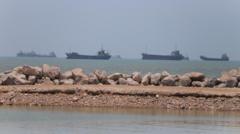
The United States has officially lifted its naval blockade of Iran, a move confirmed by US Central Command on social media platform X. This action follows the signing of a deal intended to bring an end to the ongoing war in the Middle East. While some U.S. naval vessels will remain in the broader region, the blockade's cessation marks a significant de-escalation.
This development comes after Iran's Supreme Leader, Mojtaba Khamenei, publicly commented on the agreement. Khamenei stated that he had approved the deal with the U.S. despite holding reservations, allowing it to proceed after receiving assurances from Iranian President Masoud Pezeshkian regarding the protection of the nation's rights. Khamenei characterized President Trump's approach to securing the deal as driven by desperation, employing "all kinds of leverage."
Khamenei also indicated that while future in-person negotiations between Tehran and Washington are anticipated, this does not signify an acceptance of the "enemy's position." This is the first public statement from the Supreme Leader regarding the agreement. He had not been publicly visible since assuming office in March, following the death of his father and predecessor, Ayatollah Ali Khamenei, in February strikes attributed to the U.S. and Israel that precipitated the regional conflict.
President Trump did not directly address Khamenei's remarks but posted on Truth Social his expectation of a ceasefire across all fronts, including the conflict between Israel and Hezbollah. He also expressed an expectation that Middle Eastern countries would uphold their commitment to facilitating ongoing negotiations.
The recently signed U.S.-Iran deal comprises 14 principal points. Key provisions include the reopening of the Strait of Hormuz and a stipulation that Iran must never possess nuclear weapons. A significant element is a commitment to a $300 billion fund designated for Iran's reconstruction and economic development, though U.S. financial contribution to this fund is not mandated. The agreement sets a maximum timeframe of 60 days for both parties to reach a final accord, with the possibility of mutual consent for extensions.
While an official in-person signing ceremony had been scheduled for Friday in Switzerland, mediator Pakistan informed the BBC that it was canceled because the agreement had already been finalized remotely. Representatives from both the U.S. and Iran are still expected to convene in Switzerland for subsequent discussions aimed at solidifying the peace process.
A White House spokesperson confirmed on Thursday evening that U.S. Vice President JD Vance would not be departing as initially planned, indicating a shift in diplomatic travel arrangements related to the ongoing situation. The details surrounding the remote signing and the reasons for Vance's canceled travel were not further elaborated.
The broader implications of this deal remain to be seen, particularly concerning the long-term stability of the Middle East and the future of U.S.-Iran relations. The agreement's success will likely hinge on the commitment of both nations to its terms and the willingness to engage in constructive dialogue to resolve outstanding issues.
This article was written by AI based on publicly available news reporting. Original reporting by the linked source.