US, Iran Sign 14-Point Ceasefire Deal, Reopening Strait of Hormuz
US and Iran signed a 14-point Memorandum of Understanding to end conflict, reopen the Strait of Hormuz, and commit to further talks.
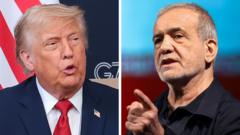
A significant agreement to extend the ceasefire between the United States and Iran has been formally signed and is now in effect, a White House official confirmed to the BBC. President Donald Trump signed the 14-point Memorandum of Understanding, known as a "deal," while attending the G7 summit in Evian-les-Bains, France. This agreement is set to reopen the pivotal Strait of Hormuz, a crucial chokepoint for global oil trade.
The accord comes four months after a conflict between the US and Iran, which also involved Israel, erupted. The Trump administration has characterized the agreement as "performance-based," meaning Iran will only see benefits if it adheres to its commitments. While the full text leaves many questions and key issues unresolved, the initial understanding addresses several critical points.
Key provisions of the agreement include an immediate and permanent termination of military operations "on all fronts," including Lebanon. This addresses concerns from both sides: the US, regarding Israeli operations against Hezbollah potentially jeopardizing the deal, and Iran, which insisted Lebanon be included in the truce. A spokesperson for the Iranian Ministry of Foreign Affairs stated that any continuation of Israeli military operations in Lebanon would be considered a violation, necessitating "necessary measures."
The agreement also stipulates that neither side will initiate military operations or threaten the other, while ensuring the territorial integrity and sovereignty of Lebanon. The document asserts that the final agreement will lead to a permanent end to the conflict, though Israel's reaction to these terms remains unclear.
Another significant point is a commitment from Iran that it "will never have a nuclear weapon." Concurrently, the agreement includes a commitment for a $300 billion fund for Iran's reconstruction and economic development. However, the US is not obligated to contribute to this fund, and Iran's benefit is contingent on its compliance.
Both the US and Iran have committed to further talks over the next 60 days to negotiate the many key issues left undecided in this initial memorandum. The "deal" emphasizes mutual respect for "internal affairs," as read verbatim to reporters by US officials, indicating a move towards de-escalation and non-interference.
The reopening of the Strait of Hormuz is a particularly consequential element, given its strategic importance in the global energy market. Its closure or disruption has historically led to significant price volatility and geopolitical tension.
Details regarding the specific "necessary measures" Iran might take in response to violations, or how Israel will formally respond to the inclusion of Lebanon in the ceasefire, are among the many aspects that remain to be clarified in the ongoing negotiations.
This article was written by AI based on publicly available news reporting. Original reporting by the linked source.