UK's Hottest Summer on Record Looms as Temperatures Hit 16.48C
The UK is on track for its hottest summer ever, with current temperatures 1.88C above average and a record set last year.
The United Kingdom is poised to experience its hottest summer since records began, with provisional data from the Met Office indicating that the current meteorological summer (June 1 to August 10) has already registered a mean temperature of 16.48C (61.66F). This figure is a significant 1.88C above the 1991-2020 average and surpasses the previous record of 16.10C (60.98F) set in the summer of 2025. The data suggests that only average conditions for the remainder of August are needed to officially break the record.
This exceptional heat aligns with scientific projections regarding climate change, which predict increasingly hotter and drier summers for the UK. The summer of 2026 has already been marked by a series of extreme weather events. It began with a late-spring heatwave that established a new May temperature record, followed by further heatwaves in June and a prolonged two-week period of intense heat in July. These have been punctuated by additional heat spikes, with many locations reaching heatwave thresholds multiple times.
Provisional Met Office statistics reveal a striking 37 consecutive days of heatwave conditions somewhere within the UK this year. The highest temperature recorded so far this summer was 38C (100.4F) at Lingwood, Norfolk, on June 26. Forecasters have issued an amber extreme heat warning for parts of England for Thursday, indicating the possibility of this summer's peak temperature being equalled or even surpassed.
The implications of this sustained heat are far-reaching. Long-standing temperature records have been consistently broken throughout the summer. Notably, 2026 marks the first year on record where temperatures have reached or exceeded 35C (95F) in three separate calendar months: May, June, and July. With the potential for 38C later this week, a fourth calendar month could be added to this tally. Furthermore, July 2026 has been recorded as the driest July for both England and Wales since records began in 1836, with southern England experiencing its driest calendar month on record.
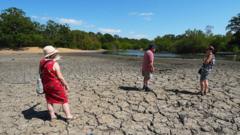
The prolonged warm and sunny conditions have led to drought declarations in more than two-thirds of England and across all of Wales. This affects approximately 45 million people in England living in drought-affected areas, with over 27 million facing water use restrictions. Current forecasts indicate a lack of significant rainfall across most of England and Wales for the majority of the current week. However, there are some indications of rain moving in from the Atlantic over the weekend, potentially bringing the first substantial rainfall for many in nearly two months.
Scientists attribute the persistent high-pressure systems and the resulting extreme summer heat to long-term climate change trends. This pattern of weather is consistent with warnings issued by climate experts about the future of summer conditions in the region.
The dry conditions have placed considerable pressure on water resources. The National Drought Group has highlighted the significant impact on water availability, particularly in drought-stricken areas.
While the immediate forecast offers a glimmer of hope for rain, the overarching trend points towards increasingly severe summer weather events, underscoring the need for adaptation and mitigation strategies in response to climate change.
This article was written by AI based on publicly available news reporting. Original reporting by the linked source.