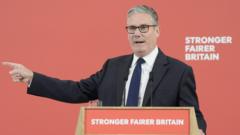
Starmer Cuts Budgets, Boosts Defence by £15 Billion
Prime Minister Starmer redirects £15 billion from investment to defence, cancelling some projects for increased military spending.
Prime Minister Sir Keir Starmer announced on June 29, 2026, a significant £15 billion increase in military spending over the next four years, funded by cuts to other government investment budgets. This long-delayed defence investment plan (DIP) aims to raise annual defence expenditure to £80 billion by 2029.
The move signifies a major policy shift, as the funding will be generated by reducing investment in areas such as road and energy projects, rather than through additional borrowing. Sir Keir stated that the plan seeks to reverse what he described as the "corrosive hollowing out" of the armed forces under previous Conservative governments.
The Treasury confirmed that while £10.3 billion in savings have been identified, the incoming government, widely expected to be led by Andy Burnham, will need to find an additional £4.7 billion in savings for the defence budget. This £15 billion increase falls short of the £28 billion requested by defence chiefs but surpasses the £13.5 billion previously secured by former Defence Secretary John Healey, who resigned in protest of the original plans.
Key allocations within the DIP include over £64 billion for the UK's nuclear deterrent, encompassing new submarines and F-35A fighter jets. An additional £5 billion is earmarked for a drone transformation initiative, and more than £8 billion will support the global combat air programme (GCAP) for next-generation RAF stealth jets in partnership with Japan and Italy. The Royal Navy is set to become a hybrid force utilizing autonomous vessels alongside traditional warships, with funding for six new vessels.
The Ministry of Defence (MoD) itself is tasked with finding nearly £11 billion in efficiency savings by 2030 through measures such as reducing its civilian workforce, cutting consultancy spending, and increasing technology adoption. However, defence officials have indicated that the planned spending increase is not contingent on these savings being realized.
Several defence programmes have been discontinued to facilitate the budget reallocation. These include the scrapping of Storm Shadow missiles, a new satellite system, and the phasing out of Wildcat utility helicopters, which will be replaced by an unspecified alternative.
Details regarding the cancellation or postponement of specific road projects have emerged, with the Department for Transport (DfT) identifying £700 million in potential savings. Projects such as the A38 Derby Junctions and the A46 Newark Bypass scheme are reportedly under consideration for cancellation as part of these measures.
Further details on the defence investment plan and the specific budgetary adjustments across government departments are expected to be released in the autumn, alongside the new government's first Budget. The plan outlines the Royal Air Force's development of autonomous fighter jets and the introduction of its uncrewed electronic warfare drone system in 2026.
This article was written by AI based on publicly available news reporting. Original reporting by the linked source.