Uganda Launches Food Aid After 19 Die Amid Severe Drought in Karamoja
Uganda begins distributing 9,400 tonnes of food to 1.5 million people facing malnutrition after 19 deaths from hunger.
Uganda has initiated an emergency food relief operation in the Karamoja region following reports of at least 19 deaths attributed to hunger. The crisis has been exacerbated by a prolonged drought that has led to widespread crop failures, impacting the region's 1.5 million inhabitants who are now facing acute food shortages and escalating malnutrition.
The Famine Early Warning Systems Network (Fews Net), a global body that monitors food security, has categorized the situation in Karamoja as a crisis. This government-led initiative marks the first large-scale response to address a funding gap created by reduced international aid.
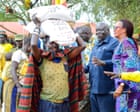
Authorities announced plans to distribute 9,400 tonnes of relief food over the next two months. This effort is financed by a 45 billion Ugandan shilling (£9 million) emergency allocation approved by parliament. The distribution commenced on Wednesday with the launch by Sam Engola, Uganda’s minister for disaster preparedness and refugees, at a primary school in Lodiko sub-county, Kaabong district.
Minister Engola stated his commitment to ensuring equitable distribution, emphasizing that the president is concerned about any hunger-related deaths in Karamoja and that no one would be overlooked. The government aims to provide food security for the affected population during this critical period.
Karamoja is currently experiencing one of its most severe dry spells in recent years. Farmers have seen their crops fail since April, which is typically the start of the planting season, due to the absence of adequate rainfall. This environmental challenge has directly contributed to the food scarcity.
Local accounts describe the harsh realities faced by residents. Angelina Nakiru, a mother of two in Rupa, approximately five miles from Moroto town, shared her struggles, illustrating the human impact of the drought and food shortages. The situation highlights the vulnerability of communities dependent on agriculture in the face of climate variability.
This large-scale food distribution is a critical intervention designed to avert further loss of life and alleviate suffering among the most vulnerable populations in Karamoja. The government's proactive measure seeks to bridge the gap left by declining international aid, underscoring a national commitment to addressing internal humanitarian crises.
As the distribution unfolds, ongoing monitoring by agencies like Fews Net will be crucial to assess the effectiveness of the relief efforts and identify any areas requiring additional support. The long-term resilience of the Karamoja region to climate shocks and food insecurity remains a significant challenge.
This article was written by AI based on publicly available news reporting. Original reporting by the linked source.