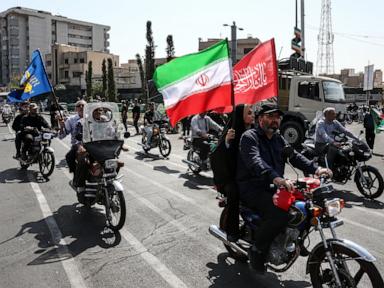
Trump Rejects Iran's Hormuz Deal, Citing Iranian Weakness
President Trump rejected Iran's proposal to reopen the Strait of Hormuz, stating the U.S. has total control and Iran is 'dying'.
President Donald Trump announced Saturday that he has rejected a seven-day proposal from Iran aimed at reopening the strategic Strait of Hormuz. Trump stated that the United States has "total control" of the vital waterway and indicated that Iran's offer was an attempt to salvage its failing economy.
"Well, I'm rejecting their deal. They want to make a deal where we open the Strait immediately because they're losing so badly," Trump told reporters. He added, "We're winning tremendously. We have total control of the Hormuz Strait."
The proposal comes amid ongoing tensions and exchanges of strikes between the U.S. and Iran, with the Strait of Hormuz serving as a primary flashpoint. Negotiations aimed at a war-ending deal had previously broken down in August, following major U.S.-Israeli strikes against Iranian targets in February. Trump had subsequently vowed to launch a "crushing economic operation" to force Tehran's submission.
Trump suggested Iran's motivation for reopening the strait was economic desperation. "They want to make a deal. I think that's fine, I like making a deal too. But I'm not. That deal would not be acceptable," he said. "And what they want to do is immediately open the Hormuz Strait. You know why? Because they're dying. You know why they're dying? Because they have no money coming in. Because they get their money from the Hormuz Strait."
Concerns about escalating conflict remain high. A deputy political commander of Iran's Islamic Revolutionary Guard Corps Navy, Ali Mohammadi, stated on Saturday that Iranian forces would target American vessels in the Indian Ocean if heavy fighting with the U.S. resumes. The Indian Ocean lies beyond the southern entrances to the Strait of Hormuz and the Gulf of Oman.
Earlier in the week, Iranian President Masoud Pezeshkian acknowledged a "major atmosphere of mistrust" between the two nations but expressed readiness for a trust-building relationship. Pezeshkian made these remarks after addressing the U.N. General Assembly in New York.
The Strait of Hormuz is a critical chokepoint for global oil shipments, with roughly 20% of the world's total oil consumption passing through it annually. Control or disruption of this waterway has significant implications for international energy markets and global security.
Details of Iran's specific seven-day plan to reopen the strait were not disclosed by President Trump, nor did he elaborate on the precise reasons for finding the proposal unsatisfactory beyond his assertion of U.S. dominance and Iranian economic distress.
This article was written by AI based on publicly available news reporting. Original reporting by the linked source.