Trump Signs Orders Targeting Birthright Citizenship After SCOTUS Rejection
President Trump signed two executive orders aiming to curb birth tourism and narrow birthright citizenship eligibility following a Supreme Court ruling.
President Donald Trump on Thursday signed two executive orders intended to target birthright citizenship, one aimed at ending "birth tourism" and another that would restrict eligibility for those born in the United States to non-citizen parents.
The orders represent a renewed effort by the administration to alter birthright citizenship after the Supreme Court struck down a previous executive order from Trump on the first day of his second term that sought to eliminate the practice altogether.
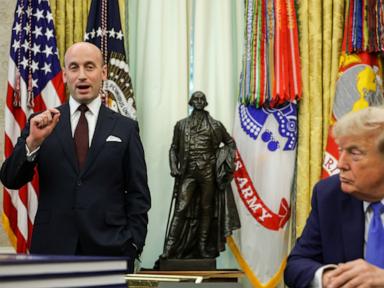
White House Deputy Chief of Staff and Homeland Security Advisor Stephen Miller stated that the administration is banning the practice of birth tourism, which he described as a fraudulent act where individuals enter the U.S. under the guise of tourism with the intent to give birth and obtain citizenship for their child. Miller cited Section 215(a) of the Immigration and Nationality Act, which he argued grants the president authority to prescribe rules for the entry and exit of non-citizens.
These new directives signal a continued focus on immigration enforcement and border security by the Trump administration. The implications could include stricter visa controls and potential legal challenges regarding the interpretation and implementation of the executive orders, especially given the Supreme Court's prior decision.
During oral arguments concerning Trump's earlier attempt to end birthright citizenship, Solicitor General John Sauer offered varying estimates for the number of "birth tourists," citing media reports that suggested figures ranging from over 1.1 million to 1.5 million from China alone. However, when pressed by Supreme Court Justice John Roberts on the exact numbers, Sauer conceded that "no one knows for sure."
The second executive order, according to Miller, would make individuals such as "alien enemies of the United States," members of foreign terrorist organizations, and those who lobby for foreign governments ineligible for birthright citizenship. This broad categorization raises questions about how such individuals would be identified and what legal basis would be used to deny citizenship to their U.S.-born children.
Trump has previously stated that hundreds of thousands of people exploit birth tourism. The administration's approach appears to be a bifurcated strategy, attempting to address "birth tourism" as a visa fraud issue while simultaneously seeking to redefine the scope of birthright citizenship through executive action, despite the Supreme Court's previous intervention.
Further details on the specific mechanisms for enforcing these orders and the potential legal ramifications remain to be seen. The administration's actions are likely to face scrutiny from legal experts and immigration advocacy groups concerned about the constitutional basis and practical effects of these new policies.
This article was written by AI based on publicly available news reporting. Original reporting by the linked source.