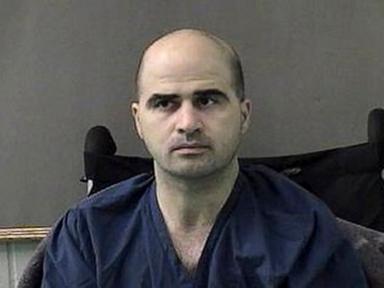
Trump cancels Nidal Hasan execution livestream, cites public sentiment
President Trump announced the firing squad execution of Nidal Hasan will not be streamed, reversing an earlier Pentagon plan.
President Donald Trump announced Thursday that the execution of Nidal Hasan, convicted of the 2009 Fort Hood massacre, will not be streamed to the public. The decision reverses a controversial announcement by Defense Secretary Pete Hegseth that the killing would be publicly broadcast.
Hasan, a former U.S. Army Major, was convicted of killing 13 people and wounding 32 others in a 2009 shooting at Fort Hood, Texas. He is scheduled to be executed by firing squad on December 3 at the same base where the attack occurred.
Trump stated on social media that while streaming the execution might serve as a deterrent, "many very good and well meaning people would rather not watch him die." He confirmed that Hasan will die as scheduled by firing squad, but the event "will not be streamed." The President added that victims' families would have the option to view the execution in person.
The Pentagon had previously maintained that the livestream was proceeding. However, Defense Department spokesperson Sean Parnell stated that Hegseth and Trump are now "completely aligned" on the decision to cancel the broadcast. Parnell confirmed that Secretary Hegseth supports the President's decision.
John Galligan, Hasan's long-time civilian attorney, expressed no surprise at the cancellation of the livestream. Galligan criticized the administration's handling of the execution, calling Hegseth's initial decision to livestream "dumb" and a violation of Army regulations.
Public executions were historically common in the U.S. but were largely restricted and abolished by the mid-20th century, with the last widely recognized public execution occurring in Kentucky in 1936.
Last week, Secretary Hegseth had publicly vowed to make Hasan's execution public and confirmed it would be livestreamed. However, sources indicated earlier this week that Trump and his advisors were debating whether to proceed with the livestream, considering concerns that broadcasting the event could fuel anti-American propaganda or negatively reflect on the U.S.
This reversal comes amid broader discussions about the execution, with Vice President JD Vance having previously expressed uncertainty about whether the execution should be broadcast.
This article was written by AI based on publicly available news reporting. Original reporting by the linked source.