BBC finds seized ships, shark fishermen on Strait of Hormuz as calm returns
BBC journalists observed seized ships and returning fishermen on the Strait of Hormuz, indicating a fragile ceasefire after intense conflict.
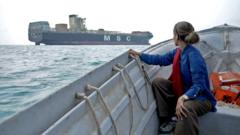
Journalists from a UK broadcaster have reported seeing seized commercial ships and returning fishermen on the Strait of Hormuz, a vital global shipping lane, during a visit to the Iranian port city of Bandar Abbas. This marks the first time a UK news crew has visited the Iranian side of the strait since the US-Israeli war with Iran began.
The Strait of Hormuz became a focal point of conflict after the US and Israel launched attacks in late February, prompting Iran to retaliate by targeting ships attempting to pass through the waterway without permission. This action effectively made the strait impassable, stranding seafarers globally and causing oil prices to surge. The US responded with a blockade of Iranian Gulf ports.
Weeks after Iran agreed to a partial reopening of the strait under a ceasefire agreement, the waters have reportedly become calm again. Fishermen, who had largely stopped venturing out due to the danger, are now returning to their livelihoods. One local fisherman explained that shark sandwiches are a delicacy, highlighting the return to a semblance of normalcy.
Despite the fragile ceasefire, two container ships seized by Iran's Islamic Revolutionary Guards Corps (IRGC) in April remain in the area. The IRGC had stated the vessels endangered maritime security by operating without permits and tampering with navigation systems. The MSC Francesca and the Epaminondas, flagged to Panama and Liberia respectively, have not yet been released. Additionally, dozens of other cargo ships were observed offshore, awaiting authorization from Iranian authorities to transit the strait.
This return to a tense calm follows a period of significant disruption. The conflict led to a de facto closure of the strait, impacting global trade and energy markets. The US blockade further escalated tensions, creating a dangerous environment for all maritime traffic.
The strategic importance of the Strait of Hormuz is underscored by its history. The BBC report noted an old fortress overlooking the sea near Hormuz Island, a remnant of centuries of struggle for control over the waterway, including its capture by the Portuguese Empire and later by the Persians.
While the ceasefire appears to be mostly holding, the continued detention of the two container ships and the waiting queue of cargo vessels suggest that the full reopening of the strait may still face bureaucratic hurdles. The situation remains fluid, with the long-term implications for global shipping and regional stability yet to be fully determined.
Many fishermen, like Abdol Rahman who guided the BBC through the strait, are cautiously resuming their work. Their return signifies a degree of restored confidence in the safety of the waters, but the underlying geopolitical tensions that led to the conflict continue to loom over this critical maritime chokepoint.
This article was written by AI based on publicly available news reporting. Original reporting by the linked source.