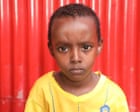
Seven-year-old faces losing ability to walk after US airstrike in Somalia
A seven-year-old Somali boy, Abdiqadir Salah, may lose the ability to walk due to shrapnel from a US airstrike, with his family unable to afford the necessary surgery.
A seven-year-old boy in Somalia, Abdiqadir Salah, is at risk of losing his ability to walk due to shrapnel lodged in his body from a U.S. airstrike that occurred six months ago. His family faces the daunting prospect of affording a $750 operation, a cost they cannot meet, while the United States government denies any civilian casualties from the attack.
The incident took place in Jamaame, Somalia, on November 15, 2025, when U.S. airstrikes killed at least 12 civilians, including eight children. This event marks one of the deadliest attacks on civilians in Somalia during recent U.S. military operations and raises significant questions about intelligence gathering, target selection, and the identification of non-combatants.
Abdiqadir sustained injuries from shrapnel in his back and upper thigh. His mother, Marian Haji Abdi Guled, recounted that the missile struck while her son was in the street outside their family home. She, along with three injured children, fled the area and hid in the surrounding countryside.
The U.S. military has not acknowledged any civilian harm resulting from the airstrikes in Somalia. This stance leaves families like Abdiqadir's with no avenue for compensation or support for medical treatment, exacerbating their plight.
The airstrikes in Jamaame are under scrutiny, with investigations by The Guardian highlighting potential flaws in how the U.S. identifies targets. The fact that children were reportedly hit while in open areas raises serious concerns about the accuracy and effectiveness of U.S. intelligence and surveillance capabilities in the region.
This incident echoes the broader, complex history of U.S. military involvement in Somalia, including the infamous 1993 "Black Hawk Down" incident. The current situation underscores the ongoing challenges of conducting counter-terrorism operations in volatile regions while minimizing civilian harm.
Abdiqadir's mother expressed her deep anguish, stating, "What's worse than being [unable to] do anything for [my] wounded children?" Her words encapsulate the profound helplessness felt by families impacted by such events, particularly when official accountability and support are absent.
As Abdiqadir's condition remains critical, the unresolved questions surrounding the airstrike—including the justification for the targets and the reasons for civilian casualties—continue to loom large. The family's struggle for his survival is compounded by the lack of acknowledgment and aid from the U.S. government.
This article was written by AI based on publicly available news reporting. Original reporting by the linked source.