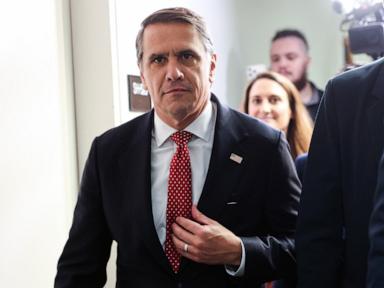
Senate Judiciary Committee Advances Todd Blanche's AG Nomination After Fund Rescinded
The Senate Judiciary Committee advanced Todd Blanche's nomination for attorney general in a party-line vote after he rescinded the "Anti-Weaponization Fund."
The Senate Judiciary Committee voted Tuesday to advance acting Attorney General Todd Blanche's nomination to permanently lead the Department of Justice, following a party-line vote of 12-10. All Republican committee members supported the nomination, while all Democratic members voted against it.
Blanche's advancement was secured after he agreed to formally rescind the administration's "Anti-Weaponization Fund," a $1.8 billion initiative that had drawn significant bipartisan concern. This move appeased key Republican senators, including John Cornyn and Thom Tillis, who had expressed reservations about the fund's scope and implications.
Senators Cornyn and Tillis stated that their concerns were satisfied by the agreement, which also clarified the scope of President Donald Trump's IRS immunity deal. Cornyn noted that while the agreement does not legally prevent the fund's resurrection under a different guise, the Department of Justice has maintained its position that the fund is defunct, and he expects that assertion to hold in future litigation.
Senator Tillis described the "1776 fund" as an "insult to the police officers and the people that defended us on January the 6th," and expressed satisfaction that it has been rescinded. He also voiced hope that Blanche's confirmation would lead to a reduction in "malicious prosecution."
Committee Chairman Chuck Grassley thanked Cornyn and Tillis for their efforts in resolving the matter, stating that the formal rescission and clarification of claims release has "put this issue to bed once and for all." He acknowledged that many senators shared these concerns.
Democratic Senator Chris Coons, however, viewed Blanche's willingness to support the "Anti-Weaponization Fund" as disqualifying. Coons argued that as acting attorney general, Blanche should have refused the "plainly unethical and corrupt" request from the president. Coons also pressed Blanche during his confirmation hearing on whether he attempted to dissuade President Trump from the plan, but Blanche reportedly refused to answer.
During his confirmation hearing, Blanche countered concerns that he was merely an "yes man" to President Trump, asserting that he provided counsel and was not simply compliant with presidential directives. The details of these exchanges and Blanche's specific responses to questions regarding his advice to the president remain central to the ongoing debate.
The nomination now proceeds to the full Senate for consideration. The party-line vote in the Judiciary Committee suggests that the confirmation process may continue to be contentious, with Democrats likely to raise similar objections regarding Blanche's past actions and decisions.
This article was written by AI based on publicly available news reporting. Original reporting by the linked source.