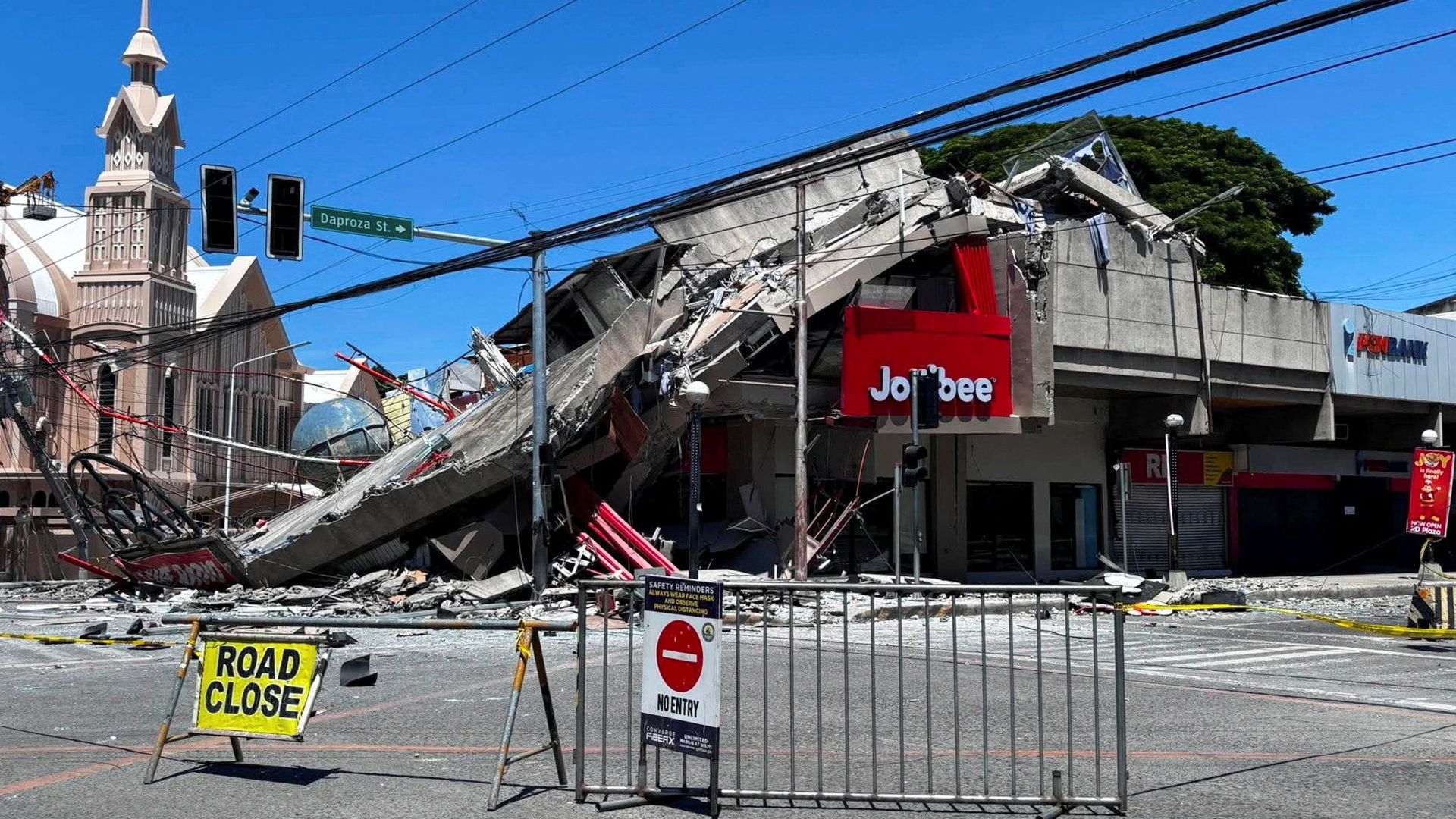
Philippines Earthquake: 35 Dead, Tsunami Alert Issued After Magnitude-7.8 Strike
A powerful magnitude-7.8 earthquake rocked the Philippines' Mindanao island, leaving at least 35 dead and triggering a tsunami alert.
A devastating magnitude-7.8 earthquake struck the island of Mindanao in the Philippines, resulting in at least 35 fatalities and prompting a tsunami alert for coastal areas. The powerful tremor occurred at a shallow depth, intensifying its impact on the region.
The earthquake's epicenter was located off the coast of Mindanao, a major island in the southern Philippines known for its diverse geography and population centers. The seismic event has sent shockwaves through the nation, raising immediate concerns for the safety of residents in affected areas and prompting emergency response efforts.
Initial reports indicate that the majority of the casualties were caused by the earthquake's violent shaking, which led to structural collapses and other hazards. Authorities have confirmed the death toll has risen to 35, with fears that the number could climb as search and rescue operations continue. The issuance of a tsunami alert by the Philippine Institute of Volcanology and Seismology (PHIVOLCS) added to the urgency, warning coastal communities to prepare for potential sea level changes.
The implications of this earthquake are significant, not only in terms of immediate loss of life and destruction but also for the long-term recovery and resilience of the affected communities. The shallow depth of the quake suggests a strong possibility of significant surface rupture and widespread ground shaking, exacerbating damage to infrastructure.
Mindanao is part of the "Pacific Ring of Fire," a horseshoe-shaped basin known for its frequent seismic and volcanic activity. The region experiences numerous earthquakes each year, though a magnitude-7.8 event is considered exceptionally strong and capable of causing widespread devastation. The Philippines lies at the convergence of several tectonic plates, making it highly susceptible to seismic events.
Emergency services, including national disaster agencies and local government units, have been mobilized to conduct search and rescue operations and to provide immediate assistance to those displaced or injured. Relief efforts are expected to focus on providing shelter, medical aid, and essential supplies to the affected populations. The scale of the disaster will likely require significant national and potentially international support for recovery.
PHIVOLCS has advised residents in coastal areas to evacuate to higher ground as a precautionary measure following the tsunami alert. The institute is closely monitoring seismic activity and sea levels to assess the threat and provide further guidance. The duration and intensity of any potential tsunami waves remain a critical concern for coastal communities.
Questions remain regarding the full extent of the damage, the total number of casualties, and the long-term impact on Mindanao's infrastructure and economy. The effectiveness of the emergency response and the speed of recovery efforts will be closely watched in the coming days and weeks as the Philippines grapples with this significant natural disaster.
This article was written by AI based on publicly available news reporting. Original reporting by the linked source.