Personalised Vaccine Halts Melanoma Return in Promising Trial
A new personalised cancer vaccine combined with immunotherapy significantly stopped high-risk melanoma returning in patients after surgery.
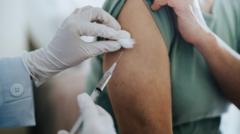
A personalised cancer vaccine, developed by Merck and Moderna, has shown promising early results in preventing the return of high-risk melanoma after surgery. The vaccine, administered alongside the immunotherapy drug Keytruda, significantly extended the time patients remained cancer-free compared to Keytruda alone, according to an announcement by the two pharmaceutical companies.
This development marks a potentially significant step forward in cancer treatment, leveraging mRNA technology similar to that used in some COVID-19 vaccines. The personalised nature of the vaccine means it targets specific mutations found in an individual patient's tumour, aiming to train the immune system to identify and attack any remaining cancer cells.
In a phase three trial involving over 1,000 patients with stage two, three, or four melanoma, the combination therapy demonstrated a reduction in the risk of the disease spreading to other organs. While the companies have hailed the findings as a breakthrough, cancer experts urge caution, emphasizing that full results are yet to be released, peer-reviewed, and approved by regulatory bodies before potential availability.
The implications of this trial extend beyond melanoma. Cancer experts suggest this could provide crucial proof of principle for the efficacy of personalised cancer vaccines across various cancer types. Merck and Moderna are already exploring similar personalised vaccines for lung, bladder, and kidney cancers, indicating a broader strategy in this innovative treatment approach.
Stephane Bancel, chief executive of Moderna, described the findings as a pivotal moment in cancer research. Following the announcement, shares in both Moderna and Merck saw a surge, reflecting investor confidence in the potential of this new technology.
Health organizations have responded positively but with measured optimism. Dr. Talisia Quallo, head of prevention and early detection at Cancer Research UK, stated that the research shows promise but stressed the importance of thorough review of the interim data. She highlighted the vital need for continued funding to develop personalised treatment options that can improve patient outcomes and longevity.
Dr. Lennard Lee, a consultant medical oncologist and associate professor at the University of Oxford, commented that the news is encouraging for melanoma patients and has broader implications, serving as a validation for the concept of personalised cancer vaccines.
The trial focused on patients who had undergone surgery for high-risk melanoma. The personalised vaccine was created by sequencing the DNA of a small portion of the patient's removed tumour, identifying unique mutations, and then designing a vaccine to target these specific markers. This approach aims to elicit a highly targeted immune response against any residual cancer cells.
This article was written by AI based on publicly available news reporting. Original reporting by the linked source.