Trump Meets Separately With Netanyahu and Zelenskyy Amid Global Conflicts
President Trump held separate meetings with Israeli PM Netanyahu and Ukrainian President Zelenskyy at the White House, discussing key global issues.
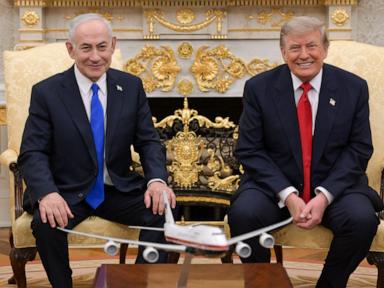
President Donald Trump met separately with Israeli Prime Minister Benjamin Netanyahu and Ukrainian President Volodymyr Zelenskyy at the White House on Tuesday, July 28, 2026. The meetings occurred as the U.S. policy on the Middle East and the Russia-Ukraine war remains under review, offering both leaders an opportunity to advocate for their respective agendas.
These high-level discussions provided a platform for Netanyahu and Zelenskyy to engage directly with President Trump on critical geopolitical matters. For Netanyahu, the talks likely focused on Israel's security concerns, particularly regarding Iran, and the ongoing U.S. strategy in the region. Zelenskyy's meeting was expected to address the protracted conflict in Ukraine and the need for continued U.S. support.
White House press secretary Karoline Leavitt announced the conclusion of the meetings on social media, describing them as "positive and productive." She stated that President Trump had wrapped up his discussions with both President Zelenskyy and Prime Minister Netanyahu. The two leaders were also scheduled to attend the funeral service for the late Senator Lindsey Graham later in the week.
The meetings come at a time of significant flux in U.S. foreign policy. With the war in Ukraine reaching its five-month mark and ongoing tensions in the Middle East, the outcomes of these discussions could influence American engagement and support for both nations. The timing also follows recent public friction between President Trump and Prime Minister Netanyahu.
Prime Minister Netanyahu's visit to Washington followed a period of heightened tension with President Trump. In a recent interview, Trump expressed skepticism about Netanyahu's intelligence on Iran, suggesting it was an attempt to prolong U.S. involvement in the region. Netanyahu, in turn, stated his intention to discuss Israel's security and strength with Trump, aiming to "safeguard Israel's security, strengthen its power, and expand the circle of peace."
Relations between Trump and Netanyahu have seen recent strain, with Trump publicly criticizing the Israeli leader. Reports indicated that Israel felt bypassed regarding a U.S. memorandum of understanding with Iran that established a ceasefire and reopened the Strait of Hormuz. Further concerns were raised by Israeli officials over potential U.S. deals involving nuclear energy with Saudi Arabia and fighter jet sales to Turkey.
Senator Graham, a staunch supporter of Israel and critic of Iran, had recently met with Zelenskyy in Kyiv. His advocacy for stronger sanctions on Russia and his death earlier in the month add another layer of context to the current geopolitical landscape and the presence of both leaders in Washington.
As President Trump navigates complex international relations, these separate meetings with key global figures underscore the administration's focus on ongoing conflicts and regional stability. The specific details of the discussions and their subsequent impact on U.S. policy toward Iran and Ukraine are anticipated to unfold in the coming weeks.
This article was written by AI based on publicly available news reporting. Original reporting by the linked source.