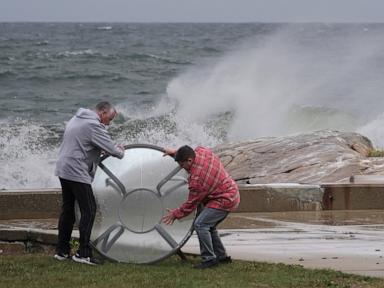
New York Declares State of Emergency as Nor'easter Lashes Northeast Coast
New York and New Jersey declared states of emergency as a powerful nor'easter brought heavy rain, high winds, and coastal flooding to millions.
New York City and parts of its surrounding areas are under a state of emergency as a powerful nor'easter churns up the Northeast coast, bringing with it heavy rain, strong winds, and the threat of significant coastal flooding. The storm, which began impacting the region this weekend, has prompted governors in both New York and New Jersey to declare emergencies for millions of residents.
New York Governor Kathy Hochul declared a state of emergency for New York City, Long Island, and Westchester County, urging residents to take the storm seriously. In neighboring New Jersey, Governor Mikie Sherrill issued a similar declaration for eight counties expected to face the most severe weather: Atlantic, Burlington, Cape May, Cumberland, Middlesex, Monmouth, Ocean, and Salem. These declarations allow for expedited deployment of resources and personnel to manage the storm's impacts.
The nor'easter is characterized by damaging winds, relentless rain, and substantial coastal erosion. Waves reaching up to 19 feet were already recorded along North Carolina's Outer Banks, with expectations of 12-foot waves extending up the coast to New Jersey and New England. Coastal flood alerts are in effect from North Carolina to Maine, with some areas anticipating inundation up to three feet above normal tide levels.
The storm's implications extend beyond potential property damage, with widespread disruptions anticipated. Flight cancellations are likely along the Northeast corridor, and the severe weather has already led to the cancellation of several major events. Ed Sheeran's weekend concerts at Gillette Stadium in Massachusetts were canceled, as were the Global Citizen Festival in New York City and the Oceans Calling music festival in Ocean City, Maryland.
Forecasters predict damaging gusts up to 60 mph along the Jersey Shore, Rhode Island, and Massachusetts coasts, with New York City potentially experiencing wind gusts of 40 to 50 mph. The heavy rainfall is expected to move inland from New Jersey to Massachusetts throughout Saturday, contributing to the widespread flooding concerns. The storm is anticipated to reach its peak strength on Saturday.
Residents across the affected areas are being advised to prepare for potential power outages due to the high winds and to avoid unnecessary travel. The combination of high tides and strong onshore winds is a recipe for significant coastal flooding, particularly in low-lying areas and along popular shorelines. Beach erosion is also a major concern, with the powerful waves reshaping coastlines.
This nor'easter follows a period where millions in the Northeast were already bracing for its arrival. The storm's path and intensity are being closely monitored by emergency management agencies, which are coordinating response efforts. The meteorological definition of a nor'easter involves a low-pressure system that forms or intensifies off the Atlantic coast of the U.S. and brings a blend of rain, snow, and wind, with the most severe impacts typically occurring along the coast.
Officials are emphasizing the importance of heeding evacuation orders if issued and staying informed through official channels. The full extent of the storm's damage will likely become clearer once the weather system moves out of the region early next week, but immediate preparations are underway to mitigate its effects.
This article was written by AI based on publicly available news reporting. Original reporting by the linked source.