Mayors Gain Power to Overrule Councils on Major Planning Decisions
Mayors across England will soon have the authority to override local council planning decisions for large developments, aiming to boost housing and regeneration.
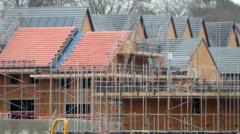
Mayors in England are set to receive new powers that will allow them to overrule local councils on certain significant planning decisions. The change, announced by the government, aims to accelerate the delivery of new homes and regeneration projects across the country.
The new authority will apply to proposals involving more than 150 homes, commercial spaces exceeding 15,000 square metres, or buildings taller than 30 metres. This expansion of powers will extend to mayors in 13 combined authorities, including major urban areas like Manchester, Liverpool, the West of England, and the West Midlands. These mayors will gain similar capabilities to the Mayor of London, who already possesses the ability to "call in" specific planning applications.
Housing minister Matthew Pennycook stated that these powers are a crucial component of the tools mayors require to effectively facilitate new housing and urban renewal. He emphasized that while London has seen housebuilding fall in recent years, the existing "call in" powers have been instrumental in unblocking strategic growth sites within the capital.
However, the move has drawn criticism from some quarters. The Conservative party has raised concerns about the appropriateness of councils losing the ability to make planning decisions within their own communities. Paul Bristow, the Conservative mayor for Cambridgeshire and Peterborough, expressed that if he had possessed these powers earlier, he would have approved blocked schemes that could provide new homes and stimulate economic growth. He clarified that the intention is not to disregard local wishes but to encourage compromise between developers and councils, preventing a default "no" to projects.
The government's ambition to build 1.5 million homes by the end of the decade, a pledge made by the Labour government in the 2024 general election, is a significant backdrop to this policy shift. Housebuilders have warned that this target may be missed under the current planning system. Pennycook acknowledged the ambitious nature of the target but highlighted the pressing need to address the issue of nearly 180,000 children living in temporary accommodation, stating that any lesser goal would not be proportionate to the scale of the challenge.
Bristow, however, voiced skepticism about meeting the 1.5 million home target without fundamental changes, arguing that the current planning system is hindering necessary economic growth and the provision of housing for families. He suggested that the proposed mayoral powers would represent a more "light touch" approach compared to London's existing framework.
In addition to the power to overrule decisions, mayors are expected to be granted the ability to issue "up-front permission," potentially streamlining the building process by allowing construction to commence without developers needing to submit separate applications. A consultation detailing the specifics of how these new powers will function is anticipated to be released next week.
The government has stressed that local councils will retain authority over the majority of planning applications, and all decisions must adhere to existing planning regulations. Furthermore, mayors will gain a greater influence over the allocation of housing funds, with the national agency Homes England directed to align its priorities with those of local mayors. The new Prime Minister, Andy Burnham, has previously advocated for enhanced mayoral control over planning and housing matters during his tenure as Mayor of Greater Manchester.
This article was written by AI based on publicly available news reporting. Original reporting by the linked source.