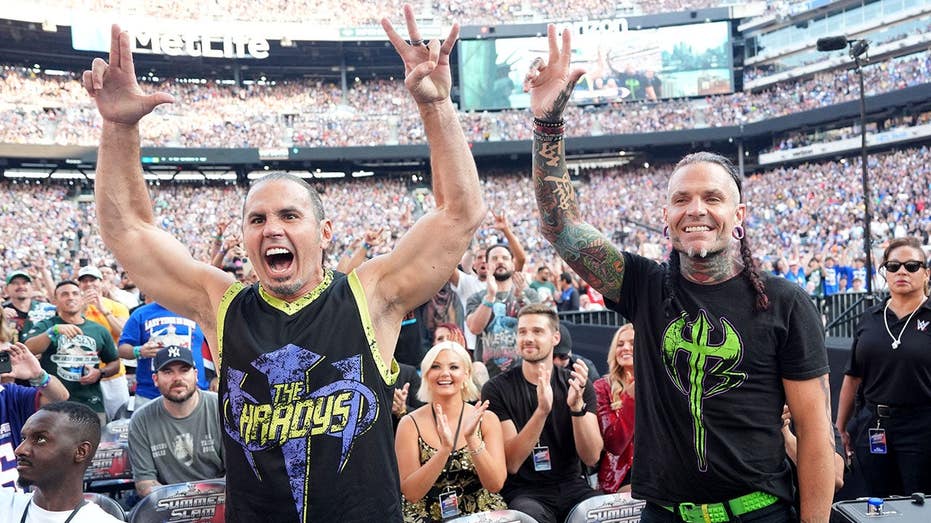
Matt Hardy: Pro Wrestling Success Demands Full Lifestyle Commitment
Veteran wrestler Matt Hardy advises aspiring talent that championship success in pro wrestling requires embracing a complete lifestyle dedication.
Professional wrestling veteran Matt Hardy has shared his perspective on what it takes for rising stars to achieve lasting success in the demanding world of sports entertainment. According to Hardy, simply performing in the ring is not enough; true achievement hinges on a comprehensive commitment to the "lifestyle" of a professional wrestler.
Hardy, who has had a decorated career spanning decades in various major wrestling promotions, emphasizes that the journey to the top requires more than just in-ring talent. He believes that embracing the unique demands and culture of professional wrestling outside of scheduled matches is a crucial differentiator for those aiming for championship-level careers.
For younger talent, Hardy's advice centers on the idea that success is built through constant dedication. This includes maintaining peak physical condition, constantly honing their craft, and understanding the business aspects of wrestling. He suggests that those who fully immerse themselves in the wrestling world, both professionally and personally, are more likely to achieve their potential and longevity.
The implications of Hardy's advice extend to the perennial discussion within the wrestling community about the sacrifices and dedication required. His perspective highlights that while talent is a foundational element, the mental fortitude and lifestyle choices play an equally significant role in a wrestler's ability to ascend the ranks and sustain a high-profile career.
Hardy's views resonate with the experiences of many long-tenured wrestlers who have navigated the rigorous schedules and physical toll of the sport. The constant travel, intense training, and the need to maintain a public persona often blur the lines between personal and professional life for those at the highest echelons of wrestling.
This philosophy underscores the often-unseen dedication that underpins the spectacle of professional wrestling. It's a world where performers must not only master athletic maneuvers and storytelling but also embody the character and commitment expected by fans and promoters alike.
While specific figures on how many wrestlers adopt this full lifestyle commitment are not readily available, Hardy's statement points to a widely recognized, albeit challenging, path for aspiring professional wrestlers seeking to stand out and succeed in a competitive global industry.
Ultimately, Hardy's counsel serves as a stark reminder that in the realm of professional wrestling, the performance extends far beyond the squared circle, demanding an all-encompassing dedication from those who wish to reach the pinnacle.
This article was written by AI based on publicly available news reporting. Original reporting by the linked source.