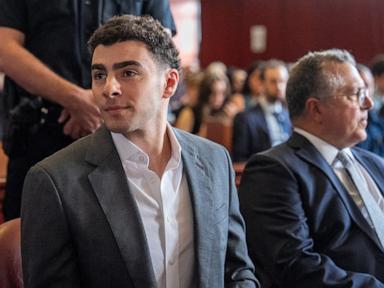
Luigi Mangione admits shooting CEO Brian Thompson, pleads guilty to federal stalking charges.
Luigi Mangione pleaded guilty to federal stalking charges, admitting he shot and killed UnitedHealthcare CEO Brian Thompson.
Luigi Mangione admitted to shooting UnitedHealthcare CEO Brian Thompson as he pleaded guilty Friday to two federal stalking counts, a significant development in the high-profile killing.
Mangione's confession came during a hearing in federal court, where he detailed his actions leading up to the shooting. He stated that he had been suffering from severe pain due to a broken back and learned that UnitedHealthcare was holding its annual investor conference in New York City.
He outlined how he obtained the conference location by posing as an investor with substantial capital in an email to the company. Mangione also detailed his preparations, including using a 3-D printer to create part of a gun and equipping it with a silencer and magazine. "My travel to New York and email to UnitedHealthcare was with the intent to shoot Brian Thompson. I shot Mr. Thompson in Manhattan and he died," Mangione stated in court, acknowledging he knew his actions were illegal.
The plea has prompted Mangione's attorneys to file a motion to dismiss state charges based on New York's double jeopardy law, arguing that the federal plea should preclude state prosecution. Meanwhile, Thompson's family issued a statement calling the plea an important step toward justice.
U.S. District Judge Margaret Garnett accepted Mangione's guilty plea to both stalking counts. Sentencing is scheduled for December 18. The judge confirmed there is no plea agreement between Mangione and the federal government, and Mangione affirmed he was promised nothing and acted without coercion.
During the hearing, prosecutors presented evidence they would have used at trial, including footage of the shooting and Mangione's subsequent flight from the scene. Members of Thompson's family, including his wife and mother, were present in the courtroom for the first time, with his wife visibly reacting to the proceedings.
Thompson's family has emphasized that while the plea is a step toward justice, "nothing will bring Brian back." The circumstances of the shooting and Mangione's stated motivations, tied to his medical condition and perceived actions by UnitedHealthcare, are central to the case.
This development shifts the legal landscape, with the federal conviction potentially impacting the ongoing state-level proceedings. The case highlights the complexities of prosecuting a murder when the defendant opts to plead guilty to related federal charges.
This article was written by AI based on publicly available news reporting. Original reporting by the linked source.