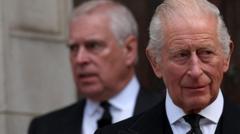
King Charles Funds Not for Prince Andrew's Legal Challenge Against Police
King Charles has instructed Prince Andrew that his private allowance cannot fund the royal's legal action against police over search warrants.
King Charles has made it clear that the private allowance he provides to his brother, Prince Andrew, is not to be used for funding the royal's legal action against Thames Valley Police and the Central Criminal Court. The King personally finances his brother's upkeep and accommodation at Sandringham, drawing from his private wealth, which includes income from the Duchy of Lancaster and personal investments.
A royal source indicated that this funding is explicitly intended for personal support and not for the legal challenge Prince Andrew is launching regarding search warrants issued ahead of his arrest in February. Prince Andrew was apprehended on suspicion of misconduct in public office, following revelations from the Epstein files. He has consistently denied any wrongdoing related to his association with the convicted sex offender Jeffrey Epstein.
As Prince Andrew is no longer a working royal, Buckingham Palace does not comment on his behalf and is not involved in his current legal proceedings. However, the source emphasized that the King's financial support should not be diverted to pay for the judicial review Prince Andrew is seeking. The exact amount of the King's allowance to his brother has not been disclosed.
This financial arrangement for Prince Andrew was part of the adjustments made when he moved from his former residence at Royal Lodge in Windsor. Importantly, the allowance does not come from the Sovereign Grant, which is public funding allocated to the monarchy. It is entirely funded from the King's private income.
Following Prince Andrew's arrest, King Charles stated that the law must take its course. The Palace is now further distancing itself from the former Duke of York's legal maneuvers. Prince Andrew's legal team is reportedly challenging the lawfulness of the search warrants executed at Sandringham and Royal Lodge, representing his first public response since his arrest earlier this year.
Thames Valley Police have acknowledged ongoing legal proceedings concerning warrants previously obtained from the Central Criminal Court. The force stated that due to the active legal nature of the case, further comment would be inappropriate. Prince Andrew, who relinquished his royal titles due to his connections with Epstein, is seeking a judicial review to scrutinize the legality of these search warrants.
A court hearing scheduled for Thursday afternoon is expected to be a significant part of Prince Andrew's effort to have the warrants quashed. The warrants in question were issued by a judge at the Central Criminal Court on February 18, the day before Prince Andrew's arrest at Sandringham.
The situation highlights the continued separation of Prince Andrew from the core activities of the Royal Family and the King's efforts to maintain a clear distinction between his personal support for his brother and the official functions of the monarchy.
This article was written by AI based on publicly available news reporting. Original reporting by the linked source.