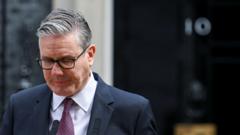
Keir Starmer Resigns as Labour Leader Amidst Devastating Election Results
Keir Starmer resigns as Labour leader following poor election results; Andy Burnham confirms bid to replace him.
Sir Keir Starmer has announced his resignation as Labour leader, concluding his tenure in a significant shift for the party. He stated he would remain in his position until a successor is chosen to lead the party.
The decision follows mounting pressure stemming from consistently dire poll ratings and a series of controversial appointments, including Peter Mandelson as his US ambassador last year. Recent elections for the Welsh and Scottish parliaments, alongside local council elections across England in May, were widely seen as a critical test for Starmer's leadership. The outcomes proved devastating for Labour, triggering resignations from key figures.
Wes Streeting stepped down as health secretary following the election setbacks, with several other junior ministers also resigning. An ally of Andy Burnham resigned as MP for Makerfield, creating an opening for the Greater Manchester mayor to pursue his ambition of returning to Parliament and contesting the leadership. Starmer had previously prevented Burnham from standing in a by-election, but with numerous MPs demanding his resignation, he lacked the authority to repeat such a maneuver.
Further eroding Starmer's standing was a prolonged internal dispute over defense spending, which led to John Healey's resignation as defence secretary earlier this month. Andy Burnham's substantial victory in Makerfield last week, where he significantly increased Labour's majority, bolstered his appeal among many MPs considering a leadership challenge.
Despite initial insistence from Starmer to contest any challenge, he ultimately concluded over the weekend that he lacked sufficient support among Labour MPs to make such a move viable. This decision paves the way for a new leader to emerge, with Andy Burnham having already confirmed his intention to run for the position.
While an official timetable for selecting a new leader has not yet been released, Starmer indicated that potential contenders would have from July 9 to July 16 to secure the necessary nominations. Labour's party rules stipulate that candidates require nominations from 81 Labour MPs to stand for leadership.
Burnham's potential candidacy is seen as a significant development, offering a prominent figure with mayoral experience to challenge for the party's top job. The coming weeks will be crucial in shaping the future direction of the Labour Party as it navigates this period of transition and seeks a leader capable of unifying the party and challenging the current political landscape.
The internal dynamics and the eventual selection process will be closely watched by political observers and the public alike as Labour aims to rebound from recent electoral disappointments and prepare for future contests.
This article was written by AI based on publicly available news reporting. Original reporting by the linked source.