Iran's military 'ready to respond' to Trump threats, top negotiator says
Iran's top negotiator stated the country's armed forces are prepared to retaliate against U.S. threats, as nuclear talks continue.
Iran's chief negotiator, Mohammad Ghalibaf, declared on Sunday that the nation's armed forces are "ready to respond" to threats made by U.S. President Donald Trump, amid ongoing nuclear negotiations in Switzerland. The statement came after President Trump issued warnings regarding Iran's uranium enrichment program and its control over the Strait of Hormuz.
These escalations occur against a backdrop of recent military operations and stalled peace talks. Major U.S.-Israeli strikes targeted Iranian sites on February 28, followed by initial talks in Pakistan in April that failed to yield a peace deal. President Trump later extended a U.S. blockade and a ceasefire, pending the conclusion of current negotiations.
Ghalibaf, in a social media post, stated that Iranian "armed forces are ready to respond in another way" and that the U.S. should "be careful with their statements." He suggested that American threats indicate a state of "despair" and that Iran "don't count on the threats of the Americans."
Vice President JD Vance, leading the U.S. delegation in Switzerland, reported "great progress" in the talks, aiming to downplay recent Israeli-Hezbollah fighting in Lebanon. Vance expressed optimism that negotiations would continue to advance, indicating that many U.S. objectives had already been met.
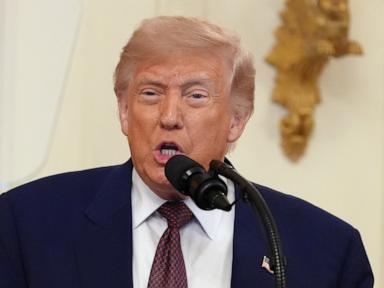
President Trump's threats, as reported by Fox News, included warnings that Iranian officials "won’t even make it back to your country" if Iran closed the Strait of Hormuz. Trump also stated the U.S. "may take over the strait, if we have to" and "collect tolls" if a deal was not reached. He also directly addressed Iranian President Masoud Pezeshkian's assertion that Iran would not relinquish its right to enrich uranium, warning him to "watch his mouth" or face consequences.
The memorandum of understanding for the current talks was read to reporters on Wednesday, and subsequently signed by the U.S. and Iranian presidents on the same day, according to a White House official. The negotiations are taking place in Bürgenstock, Switzerland, where U.S. and Iranian delegations arrived on June 20th.
Despite Vance's optimistic assessment of progress in Switzerland, tensions remain high. An Israeli Defense Forces official reported that Hezbollah fired over 50 rockets overnight, highlighting ongoing regional instability. Israel has also stated it "will not withdraw from its 'security zone' in Lebanon."
Unresolved questions remain regarding the specifics of the agreement reached and the potential impact of these continued threats on the long-term stability of the region and the future of Iran's nuclear program.
This article was written by AI based on publicly available news reporting. Original reporting by the linked source.