Iran Oil Tankers Breach US Blockade Line in Gulf of Oman
Three Iranian oil tankers, carrying 3.8 million barrels of crude, crossed a US naval blockade line, signaling confidence in an impending sanctions deal.
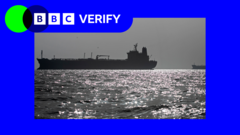
Iranian tankers loaded with crude oil have passed a US naval blockade line in the Gulf of Oman, according to ship-tracking data. Three vessels—Diona, Hero II, and Sonia I—were observed crossing the boundary, with two broadcasting their locations as they passed and a third activating its tracker just beyond the line.
This move comes despite President Donald Trump's announcement on Sunday of the immediate removal of the blockade on Iranian ports. However, US naval forces later clarified that the blockade would remain in effect until a deal with Iran is finalized, which is anticipated to occur in Switzerland on Friday.
Michelle Wiese Bockman, a senior analyst at Windward Maritime Intelligence, suggested this action indicates Iran's confidence that the blockade is nearing its end, even with the US stating it will persist until Friday. The three tankers are owned by the National Iranian Tanker Company, which, along with the ships themselves, has been subjected to US Treasury sanctions.
Iran has faced long-standing US sanctions due to concerns over its nuclear weapons program, its support for groups designated as terrorist organizations by Washington, and alleged human rights abuses. The tankers Hero II and Sonia I departed from Iran's Chabahar port on Tuesday and sailed into the Arabian Sea early Wednesday morning, passing the blockade line which extends from Oman's eastern tip to the Iranian coast.
Maritime intelligence firm Windward reported that this is the first time these specific Iranian tankers have broadcast their locations since March. If they successfully reach their destinations, these shipments would represent Iran's first oil exports in two months, according to TankerTrackers.com.
Collectively, the three ships are carrying approximately 3.8 million barrels of crude oil. Their final destinations are not currently being broadcast. The US blockade has significantly reduced Iran's crude exports, with figures showing a drop to 260,000 barrels per day in May, a substantial decrease from the 2025 average of 1.67 million barrels per day, according to data from Kpler.
The US Department of Defense previously intercepted the sanctioned tanker Tifani more than ten days after it departed the Gulf. The US had initially stated its intention to enforce the blockade early on.
The situation highlights the ongoing tensions and complex geopolitical dynamics surrounding Iran's oil trade and its international relations, particularly with the United States.
This article was written by AI based on publicly available news reporting. Original reporting by the linked source.