Second Major Quake Hits Indonesia After 7.7 Magnitude Strike
A 6.9 magnitude earthquake struck Indonesia hours after a 7.7 magnitude quake, killing 47 and damaging hundreds of homes and facilities.
A 6.9 magnitude earthquake rattled Indonesia on Saturday, August 15, 2026, just hours after a more powerful 7.7 magnitude quake struck off the country's eastern coast. The seismic activity has resulted in at least 47 fatalities and prompted hundreds to evacuate amid initial tsunami concerns.
The powerful 7.7 magnitude earthquake initially hit early Saturday morning, with its epicenter located approximately 60 kilometers north-northwest of Ende in Indonesia's Flores region at a shallow depth of about 10 kilometers. This was followed by several strong aftershocks, including the 6.9 magnitude tremor.
The Indonesian National Disaster Management Agency (BNPB) reported that at least 47 people have died, with six others injured and two still missing. The earthquakes caused significant damage, destroying or damaging more than 300 houses and over 100 public facilities. Among the damaged public structures were 87 educational facilities, 18 health facilities, six offices, and five places of worship.
Emergency crews, including members of the Indonesian National Armed Forces, are actively engaged in evacuation efforts and damage assessments. The tremors were strongly felt across the East Nusa Tenggara province, where the quakes struck shortly before 5 a.m. local time. The initial seismic events triggered fears of a tsunami, leading Indonesia's Meteorology, Climatology and Geophysics Agency to issue warnings for people to stay away from beaches and to evacuate.
While tsunami warnings were later issued, they eventually expired, providing some relief to coastal communities. However, the fear of a tsunami prompted precautionary measures, with approximately 2,000 residents in the Nagekeo Regency on Flores island carrying out self-evacuations as a safety measure.
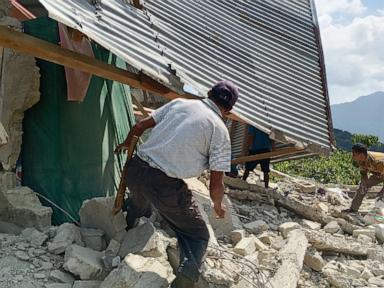
Photos from the affected areas depict widespread damage to buildings, underscoring the intensity of the seismic events. The extensive destruction to homes and public infrastructure highlights the vulnerability of the region to such natural disasters and the significant challenges faced by recovery and reconstruction efforts.
The Indonesian National Search and Rescue Agency (BASARNAS) has deployed teams to assist in rescue operations, working amidst the rubble of damaged structures. The coordinated response aims to provide aid to those affected and to ensure the safety of residents in the aftermath of the quakes.
This series of earthquakes underscores the geological instability of the region, which lies within the "Pacific Ring of Fire," an area known for its frequent seismic and volcanic activity. The full extent of the damage and the long-term impact on the affected communities are still being assessed as rescue and relief operations continue.
This article was written by AI based on publicly available news reporting. Original reporting by the linked source.