Households Urged to Read Energy Meters as Prices Jump 13%
Millions in England, Scotland, and Wales face a 13% energy price hike, prompting calls to submit meter readings to avoid higher charges.
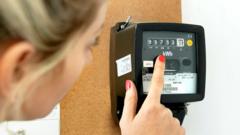
Millions of households in England, Scotland, and Wales are being urged to submit energy meter readings as prices surge by 13% starting Wednesday. This increase affects consumers whose tariffs are subject to regulator Ofgem's price cap and do not have smart meters. Submitting a reading is crucial to prevent previous energy usage from being billed at the new, higher rate.
The rise in energy prices is primarily attributed to the increased cost of gas, exacerbated by geopolitical tensions. While warmer summer weather may temporarily temper the impact by lowering energy consumption, analysts warn that higher prices are likely to persist into the winter. Consultancy Cornwall Insight predicts that the fallout from the US-Israeli conflict will continue to influence energy markets.
The new Ofgem price cap means a typical household will see an increase of approximately £18 per month. This translates to a 24% rise in gas bills and a 5% increase in electricity bills, with standing charges remaining largely unchanged. Ofgem has adjusted its estimate for typical annual energy use downwards to 9,500 kWh of gas and 2,500 kWh of electricity, reflecting reduced consumption due to high prices and improved energy efficiency in recent years.
Looking ahead, there is pressure on the government to provide further support to households facing these increased costs. While ministers have pointed to previous reforms aimed at cutting bills, Chancellor Rachel Reeves has indicated the possibility of targeted support in the autumn. However, any such measures could be subject to change depending on leadership shifts within the Labour party.
Analysts at Cornwall Insight note that while a recent ceasefire provided temporary market relief, it represents a pause rather than a resolution to the conflict. The long-term implications for energy prices will depend significantly on the outcome of any future agreements. Craig Lowrey, a principal consultant at Cornwall Insight, stated that the enduring effects of the conflict will impact prices for some time, even in optimistic scenarios.
For consumers on fixed tariffs, prices will not change until their current deal expires; approximately 40% of bill payers are on such plans. Those on variable tariffs with standard meters are advised by price comparison website Uswitch to submit readings promptly to secure the current, lower rates.
In response to the rising costs, the Trades Union Congress (TUC) has advocated for the introduction of a 'social tariff' for energy bills. This would offer discounted rates, typically reserved for those receiving certain benefits, similar to schemes available for broadband and water services. The TUC proposes that a higher tax on bank profits could fund these energy social tariffs.
The financial strain on households is already evident, with the total amount owed to energy suppliers by customers in England, Scotland, and Wales reaching a record high of £4.79 billion in the first three months of the year, a 15% increase from the previous year. This growing debt underscores the severity of the fuel poverty crisis.
This article was written by AI based on publicly available news reporting. Original reporting by the linked source.