Hong Kong Tiananmen Vigil Organizers Convicted Under Security Law
Two organizers of Hong Kong's Tiananmen vigil were convicted under the national security law, ending a decades-old tradition.
Two organizers of Hong Kong's long-standing annual vigil commemorating the 1989 Tiananmen Square crackdown have been convicted under the city's national security law. The convictions mark a significant blow to the commemoration of the event in the semi-autonomous territory.
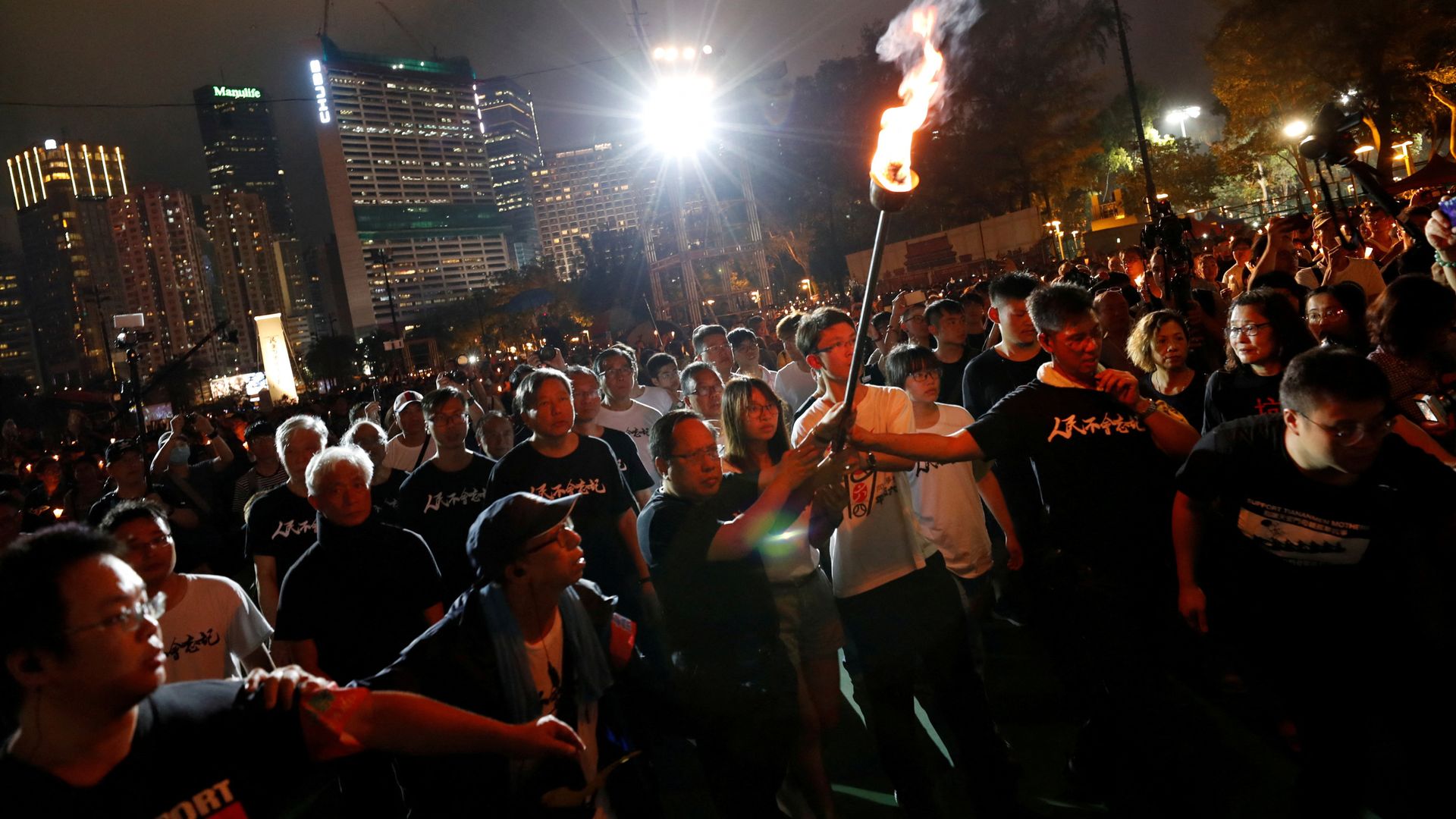
The annual vigil, held for over three decades, was a prominent display of remembrance and a rare public acknowledgment of the crackdown in mainland China, where such discussions are heavily censored. Its continuation in Hong Kong had become a symbol of the city's unique freedoms.
Details of the specific charges and the court's reasoning were not immediately available, but the convictions fall under the sweeping national security law imposed by Beijing in 2020. This law has been used to dismantle opposition movements and silence dissent in Hong Kong.
The convictions are expected to further curtail public commemorations of sensitive historical events in Hong Kong. The city's autonomy and freedoms have been significantly eroded since the implementation of the national security law.
Previous years saw hundreds of thousands gather for the candlelight vigil, a stark contrast to the muted or banned commemorations elsewhere. The government has increasingly restricted such public gatherings, citing public health or security concerns.
Human rights groups and international observers have widely condemned the national security law, arguing it undermines Hong Kong's promised freedoms and democratic aspirations. The convictions of the vigil organizers are likely to draw further international criticism.
Organizers and participants in past vigils have faced charges and arrests, but these latest convictions under the national security law represent a more definitive legal action against those who continued to publicly commemorate the Tiananmen Square events.
With these convictions, the future of public commemorations of the Tiananmen crackdown in Hong Kong remains uncertain, signaling a new chapter in the city's history and its relationship with Beijing's tightening grip.
This article was written by AI based on publicly available news reporting. Original reporting by the linked source.