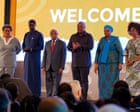
Ghana conference demands formal apology, compensation for slave trade
African and Caribbean leaders adopted a 19-point framework in Ghana, demanding formal apologies and compensation for the transatlantic slave trade.
A global framework for reparatory justice, demanding formal apologies and compensation from nations that profited from the transatlantic slave trade, was adopted at a conference in Accra, Ghana. The strategy was formally approved on Friday by heads of state, government officials, and representatives from African and Caribbean countries.
This landmark meeting marks a significant step following a United Nations resolution that declared the trafficking of enslaved Africans as the gravest crime against humanity. The adopted document, a 19-point global framework, outlines a comprehensive approach to addressing the enduring legacies of historical injustices.
The framework's core demands include a call for "all state and non-state institutions yet to do so" to "offer full, formal and unconditional apologies as a foundational step towards reconciliation, trust-building and reparatory justice." It also emphasizes the need for fair and adequate compensation for individuals of African descent affected by enslavement, colonialism, genocide, and apartheid.
Beyond apologies and financial redress, the framework advocates for the expedited return of cultural property, human remains, archives, and heritage to their countries of origin. Furthermore, it calls for multilateral measures, including debt relief, to alleviate the sovereign debt burdens that continue to impact nations grappling with the socioeconomic consequences of historical exploitation.
Participants acknowledged the "extensive efforts undertaken over generations" by various governments, intergovernmental organizations, individuals, and civil society partners across Africa, the Caribbean, the Americas, Europe, and Asia in advancing the reparations agenda. The adoption of this framework signifies a unified front in seeking accountability and restorative justice for the profound and lasting impacts of the slave trade.
The conference, held in a hotel in Ghana's capital, represents a concerted effort to translate decades of advocacy into concrete policy proposals. The presence of leaders and representatives from numerous African and Caribbean nations underscores the widespread commitment to this cause.
While the framework outlines a path forward, the implementation of these demands is expected to be complex, involving extensive diplomatic negotiations and international cooperation. The focus on a "global framework" suggests an ambition to engage a wide range of nations, including those in Europe and Asia, which played roles in the historical trade and its subsequent economic and social ramifications.
The discussions also touched upon the broader concept of "reparative justice," extending beyond monetary compensation to encompass cultural restitution and the dismantling of systemic inequalities that persist as a result of past injustices. The document aims to foster a new era of accountability and historical reckoning on a global scale.
This article was written by AI based on publicly available news reporting. Original reporting by the linked source.