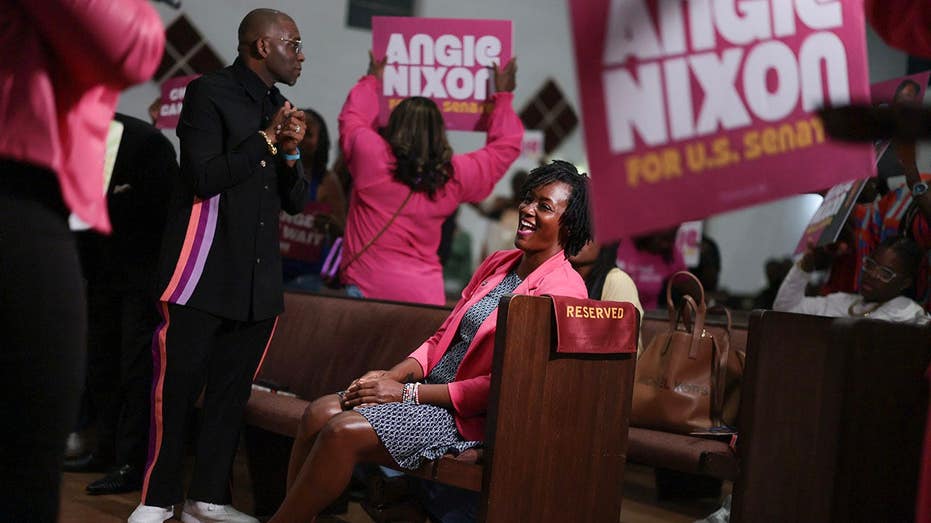
Florida Democrat Angie Nixon Accuses GOP of 'Literally Trying to Kill' Black Americans
State Senator Angie Nixon claims Republican policies are intentionally harming Black communities, a charge rejected by the Department of Homeland Security.
State Senator Angie Nixon, a far-left Democrat representing Florida's 19th District, has leveled a serious accusation against the Republican party, stating they are "literally trying to kill" Black Americans. Nixon made these remarks in the context of her broader criticisms of Republican-led policies, which she argues disproportionately harm minority groups.
Nixon's statements come amid ongoing political debates and legislative actions that she contends have detrimental effects on Black communities in Florida and nationwide. While the specific policies were not detailed in the provided material, her rhetoric suggests a belief that legislative agendas are actively contributing to negative health, economic, or social outcomes for Black individuals.
These accusations were made in response to the Department of Homeland Security's rejection of Nixon's earlier claims that U.S. Immigration and Customs Enforcement (ICE) engages in racial profiling of minority groups. The DHS's dismissal of her previous assertions adds a layer of contention to her current, more sweeping accusations against the GOP.
The implications of such strong language from an elected official are significant, potentially fueling further political polarization and intensifying scrutiny of legislative actions affecting minority populations. Nixon's claims invite a closer examination of how policies enacted by the Republican party may be impacting Black Americans.
Historically, discussions around policy impacts on racial groups have been a recurring theme in American politics. Advocates for minority rights often point to legislation concerning criminal justice, economic opportunity, healthcare access, and voting rights as areas where disparities can be exacerbated or addressed. Nixon's comments place her within this tradition of vocal criticism from within the political system.
While the source material does not provide reactions from Republican lawmakers or specific data points to support Nixon's latest claims, her past accusations regarding ICE and racial profiling suggest a pattern of challenging federal and state law enforcement and immigration policies. The DHS's rejection of those earlier claims indicates a divergence in perspective between the senator and the federal agency.
Further analysis would require examining specific Republican-backed legislation in Florida and at the federal level that Nixon and her supporters might cite as evidence for her claims. Understanding the potential mechanisms through which these policies could negatively affect Black Americans—whether through economic disenfranchisement, health disparities, or other social determinants—is crucial to evaluating the substance of her accusation.
As the political landscape continues to be shaped by intense debate over policy and its societal impact, Nixon's strong statements serve as a focal point for discussions about racial equity and the role of government in addressing systemic issues. The lack of detailed policy examples or public responses from the accused party leaves many questions about the specific basis for her assertion.
This article was written by AI based on publicly available news reporting. Original reporting by the linked source.