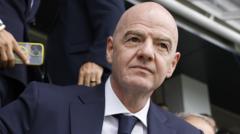
Infantino Scraps World Cup Investment Plan After Widespread Opposition
FIFA President Gianni Infantino withdraws controversial private investment proposal for World Cup following backlash from member associations.
FIFA President Gianni Infantino has officially scrapped a controversial plan to sell stakes in the governing body's competitions, including the men's and women's World Cups, to private investors. The decision comes after widespread opposition from football's continental confederations and other stakeholders.
Infantino had proposed offering FIFA's 211 member associations $40 million (£30 million) each in exchange for their backing of the private investment initiative. However, the plan quickly drew strong criticism and unified opposition from key footballing bodies.
UEFA, the governing body for European football, was a vocal opponent, voting to boycott World Cups if the plans proceeded. Concacaf, representing North, Central America, and the Caribbean, also rejected the proposal, with reports indicating a significant loss of faith in Infantino among its member associations. The Asian Football Confederation (AFC) expressed solidarity with UEFA and Concacaf.
The withdrawal of the plan places significant pressure on Infantino as he seeks re-election for a fourth term as FIFA president in March. The controversy has also led to internal repercussions, with Carlos Cordeiro, Infantino's senior advisor on global strategy and governance, resigning over the matter, deeming the proposal detrimental to football's future.
Adding to the internal dissent, FIFA's own chief operating officer, Kevin Lamour, stated that the governing body's administration had been deceived about the project's specifics. UK Prime Minister Andy Burnham also publicly stated that Infantino was not the right person to lead FIFA, reflecting broader concerns.
Despite initial vows to continue with the proposals, FIFA's administration acknowledged that the project had created divisions detrimental to its original objectives. Infantino stated that the proposal would not proceed, emphasizing his intention to reunite stakeholders in the spirit of shared interest for the game.
Sheikh Salman bin Ebrahim Al Khalifa, president of the AFC, welcomed the decision, stressing the importance of consultation and dialogue in shaping the future of global football. He highlighted the need for respect for established governance structures.
Infantino's plans were ultimately unlikely to pass, as he would have required the support of a majority of FIFA's 211 member associations – at least 106 votes – to be approved. The widespread rejection from major confederations made achieving this threshold improbable.
This article was written by AI based on publicly available news reporting. Original reporting by the linked source.