Ethiopia Drones Strike Eritrean Troops Crossing Into Tigray
Ethiopian drones attacked Eritrean soldiers who had crossed into the Tigray region, escalating fears of a wider regional conflict.
Ethiopian government drones have attacked Eritrean troops who recently crossed into the country's northern Tigray region, according to reports, significantly raising the risk of renewed internal conflict escalating into a regional war.
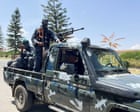
Military vehicles carrying soldiers reportedly advanced across Eritrea's southern border into Tigray on Wednesday, reaching the town of Adigrat, approximately 40 kilometers (25 miles) south of the border. Civilian witnesses, a local militia commander, and the conflict monitoring group Acled confirmed the movement.
Acled reported that Ethiopian government drones then targeted the Eritrean troops on Wednesday evening and again on Thursday morning. This development comes amidst ongoing fighting between the Ethiopian government and the Tigray People’s Liberation Front (TPLF), which initiated an offensive against the federal government on September 23.
The presence of Eritrean troops in Tigray is particularly concerning given Eritrea's historical animosity towards the TPLF. While Eritrea's immediate concern may be to preempt a potential Ethiopian invasion aimed at securing access to the Red Sea, their involvement deepens the complexity of the conflict.
In the past two weeks, the TPLF and six other armed groups have engaged Ethiopian government forces in Tigray and the neighboring Amhara and Afar regions. Ethiopian military advances have pushed back TPLF forces, and an allied militia, the Tigray Peace Force, reportedly took control of Tigray's regional capital, Mekelle, on October 4, following the TPLF's withdrawal.
Eritrea's information minister, Yemane Ghebremeskel, issued a statement indicating his government does not engage in refuting "wild allegations or narratives," without explicitly confirming or denying the presence of Eritrean troops in Ethiopia. This ambiguous response adds to the uncertainty surrounding Eritrea's role.
Ethiopia's foreign ministry, in a statement on Monday, emphasized the nation's commitment to defending its sovereignty and territorial integrity. The ministry also called for regional actors to address challenges through constructive dialogue, suggesting a desire for de-escalation while asserting Ethiopia's defensive posture.
The situation remains volatile, with the drone strikes and reported Eritrean troop movements highlighting the potential for the conflict to draw in neighboring countries and further destabilize the Horn of Africa. The motivations behind Eritrea's border crossing and Ethiopia's forceful response are critical factors in assessing the future trajectory of this escalating crisis.
This article was written by AI based on publicly available news reporting. Original reporting by the linked source.