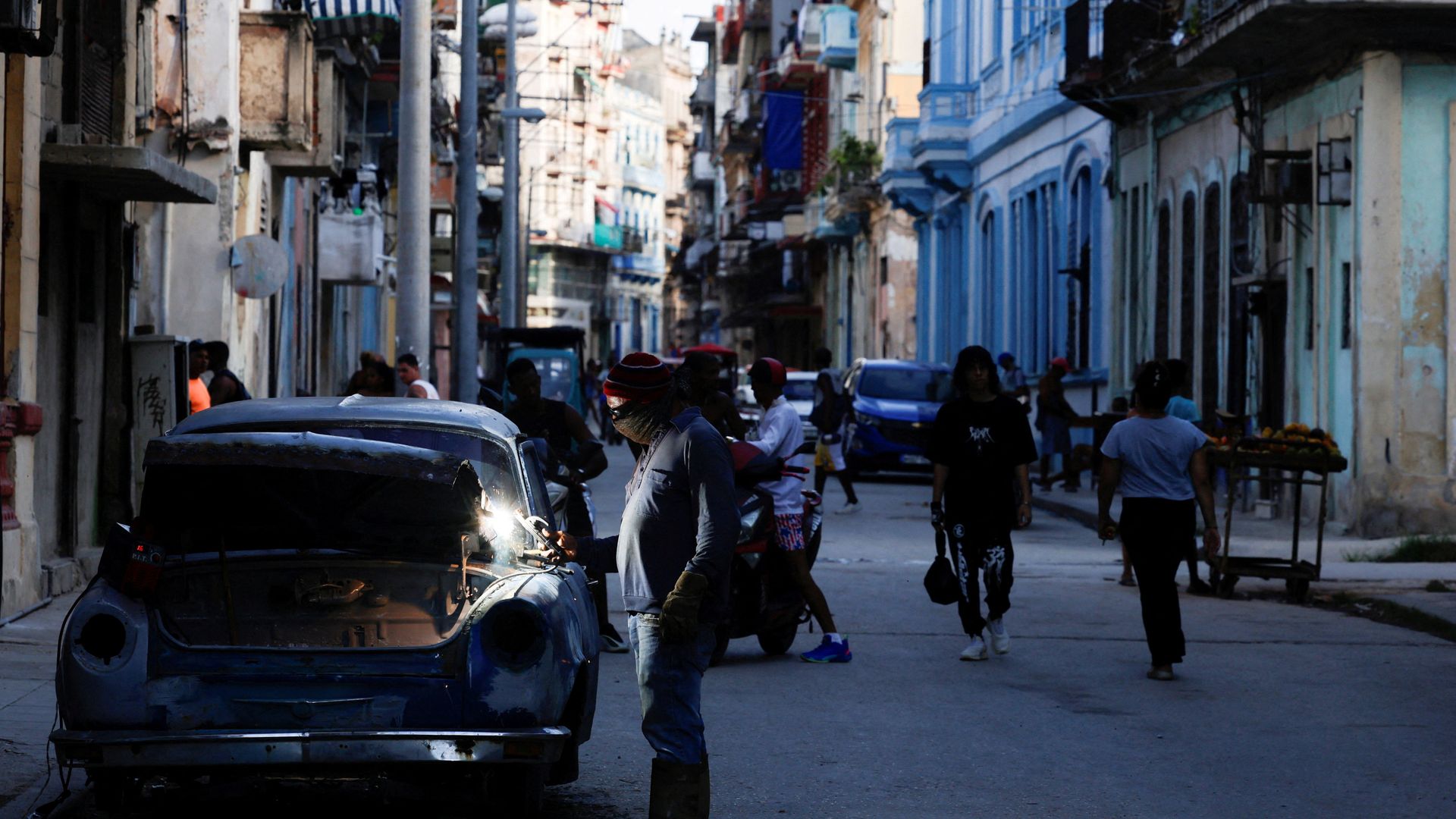
Cubans Defy Crisis: Facing Blackouts, Empty Shelves, and Low Pay
Despite severe economic hardship, Cubans are demonstrating resilience and defiance, refusing to succumb to the ongoing challenges.
Defiance has emerged as a defining characteristic of Cubans navigating a week marked by persistent blackouts, dwindling salaries, and critically depleted store shelves. This spirit of resistance is evident across the island nation as citizens grapple with a deepening economic crisis.
The current situation in Cuba reflects a complex interplay of internal economic struggles and the impact of external factors. Years of economic mismanagement, coupled with the lingering effects of U.S. sanctions and the global pandemic, have strained the nation's resources, leading to widespread shortages and economic hardship.
Reports from the ground indicate that electricity outages are now a daily reality for many, disrupting both daily life and economic activities. Simultaneously, the purchasing power of the average Cuban has significantly eroded due to falling salaries, making it increasingly difficult to afford basic necessities. The scarcity of goods in state-run stores further exacerbates the challenges, leaving many shops with bare or sparsely stocked shelves.
The resilience displayed by the Cuban people in the face of these adversities suggests a deep-seated determination to endure and adapt. This defiance, while not manifesting in overt political protests, is a quiet insistence on maintaining dignity and normalcy amidst challenging circumstances.
Experts point to a historical context of cyclical economic hardship in Cuba, where periods of scarcity have often been met with ingenuity and communal support. However, the current crisis appears to be more prolonged and pervasive, affecting a wider segment of the population and industries.
Reactions from ordinary citizens, though not explicitly detailed, consistently highlight a shared sense of perseverance. The prevailing sentiment is one of facing difficulties head-on rather than succumbing to despair, with an emphasis on mutual aid and finding creative solutions to everyday problems.
Comparisons to past economic downturns in Cuba reveal a recurring pattern of adaptation, but the current confluence of factors—including energy shortages, inflation, and limited access to foreign currency—presents a unique and formidable challenge. The government has acknowledged some of these issues, often citing external pressures as primary causes, while also implementing austerity measures.
Questions remain about the long-term sustainability of this defiant spirit in the face of continued economic pressures and the potential for further deterioration of living conditions. The ability of the Cuban economy to recover and provide a stable livelihood for its citizens will be crucial in determining the future trajectory of the nation.
This article was written by AI based on publicly available news reporting. Original reporting by the linked source.