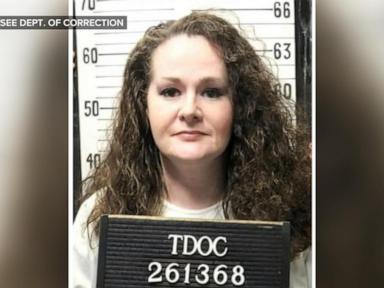
Christa Pike survived botched execution after two pentobarbital doses
Christa Pike survived a botched execution attempt where IV team reportedly struggled to find veins and administered two doses of pentobarbital.
Tennessee officials are facing scrutiny after an attempted execution of Christa Pike on September 30th appeared to go awry, with court filings detailing struggles to establish intravenous lines and the administration of two doses of pentobarbital without a successful lethal injection.
One of Pike's attorneys, Randy Spivey of the Tennessee Office of the Post-Conviction Defender, described the events in a new court filing, alleging that execution team members appeared to have difficulty administering the lethal injection. The filing, which includes Spivey's declaration as a witness to the execution at the Riverbend Maximum Security Institution in Nashville, raises concerns about the state's execution protocols and their application.
According to Spivey's account, the IV team began attempting to locate a vein at 6:34 p.m. and reportedly used approximately 10 needles. Team members expressed uncertainty about successfully inserting the needle and believed Pike's vein might have been "blown." Pike grimaced during one attempt on her left shoulder, and after a comment from a team member about a "blown" vein, another suggested to "regroup."
By 7:24 p.m., the IV team seemed satisfied with the line placement and left the chamber. However, about ten minutes later, Pike reportedly remarked that her arm felt like it was "about to bust" and was "really burning," stating that it hurt. Her breathing then became more labored, accompanied by snoring and choking sounds, according to Spivey.
The filing notes that Pike's spiritual advisor whispered to Spivey at 8:06 p.m. that she was "still alive." A third dose of pentobarbital is not authorized under Tennessee's protocol, Spivey indicated. Confusion and urgency escalated, leading to a 911 call from the prison at 8:40 p.m. requesting an ambulance.
The Tennessee Department of Correction has previously stated that it followed all established execution protocols. The department asserted that the lethal injection chemical used in their protocol has been consistently effective. ABC News has reached out to the department for comment regarding Spivey's new account.
Spivey's declaration was submitted as part of a motion to add new evidence to a complaint filed last year by several death row inmates challenging Tennessee's execution methods. This complaint is being handled by the Federal Public Defenders of Middle Tennessee.
The incident has reignited debates surrounding the methods and potential for cruelty in capital punishment. The prolonged and apparently problematic execution attempt raises further questions about the reliability and humanity of lethal injection procedures nationwide.
This article was written by AI based on publicly available news reporting. Original reporting by the linked source.