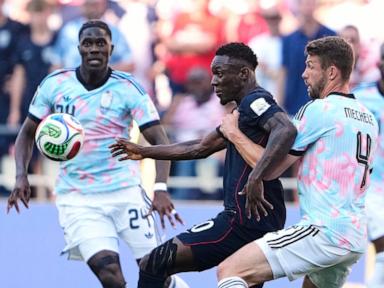
US Eliminated from World Cup After 4-1 Loss to Belgium Amid Red Card Controversy
The United States' World Cup journey ended with a 4-1 defeat to Belgium, a match preceded by controversy over Folarin Balogun's eligibility.
The United States' bid for the 2026 World Cup concluded on Monday with a decisive 4-1 loss to Belgium. The defeat marked the end of the U.S. men's national team's participation in the tournament, with Belgium advancing to face Spain in the quarterfinals.
The match was preceded by significant controversy surrounding star striker Folarin Balogun. Balogun had received a red card during the U.S.'s previous match against Bosnia-Herzegovina on July 1, which would have automatically suspended him for one game.
However, FIFA announced on Sunday that Balogun's one-game suspension would be put on hold for a probationary period of one year. This decision allowed him to be included in the starting lineup against Belgium. The Royal Belgium Football Association (RBFA) expressed astonishment at FIFA's ruling, stating they were investigating all potential options to safeguard fair play.
The implications of FIFA's decision were immediate and far-reaching, drawing criticism from other football bodies. UEFA released a statement on Monday asserting that red card suspensions are a fundamental principle embedded in regulations and cannot be subject to exceptions, especially mid-tournament.
U.S. men's national team head coach Mauricio Pochettino had previously indicated that Balogun was saddened by the initial red card call, which occurred after a clash with an opponent's foot. Pochettino suggested the incident was unintentional. The U.S. had secured a 2-0 victory in the match where Balogun received the red card, marking their first knockout round win since 2002 and only their second in program history.
The RBFA's statement highlighted their concern for "legitimate rights of all participating teams and to protect the fundamental principles of fair play." Their stance underscored the division within the football community regarding FIFA's handling of Balogun's suspension.
UEFA's strong reaction emphasized the perceived precedent-setting nature of the decision. The European governing body stated their "disbelief at such an unprecedented, incomprehensible and unjustifiable decision," noting that other players in similar situations had regularly served their suspensions.
The U.S. men's national team's best historical performance in the World Cup was a third-place finish in the inaugural tournament in 1930. The team's elimination this year, coupled with the off-field drama surrounding Balogun's potential suspension, casts a shadow over their campaign.
This article was written by AI based on publicly available news reporting. Original reporting by the linked source.